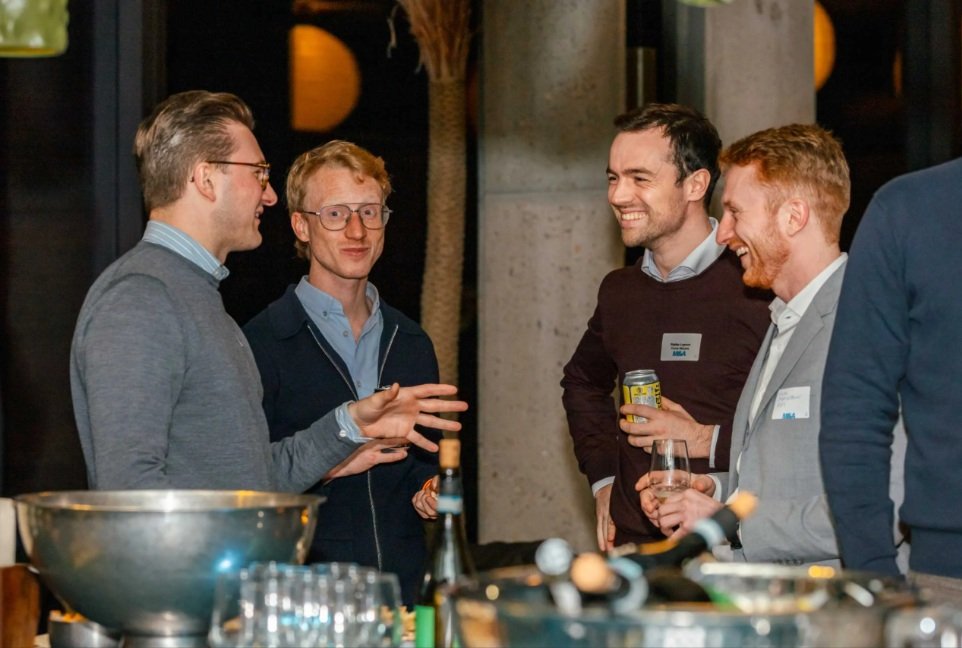

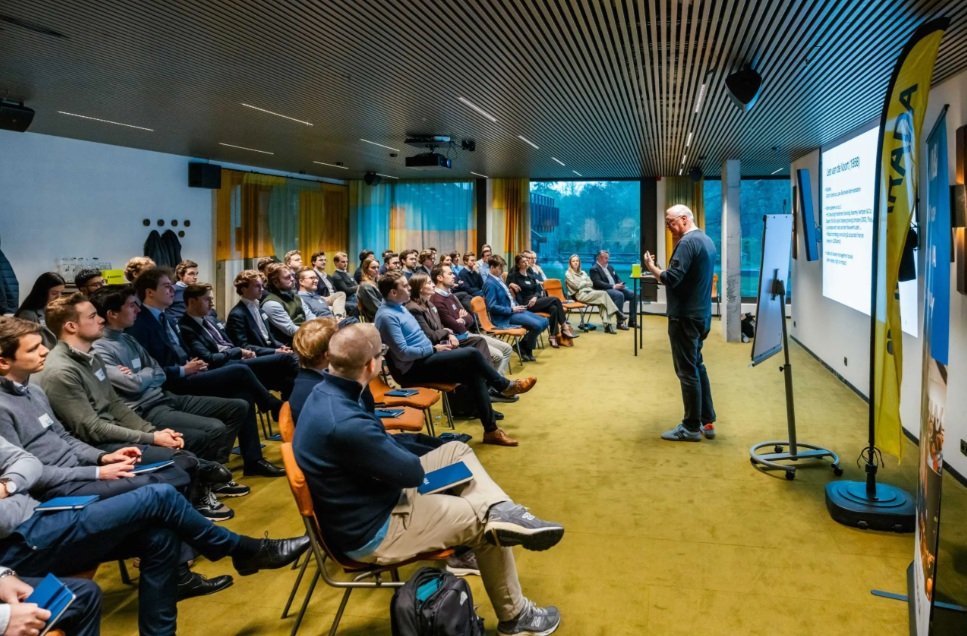
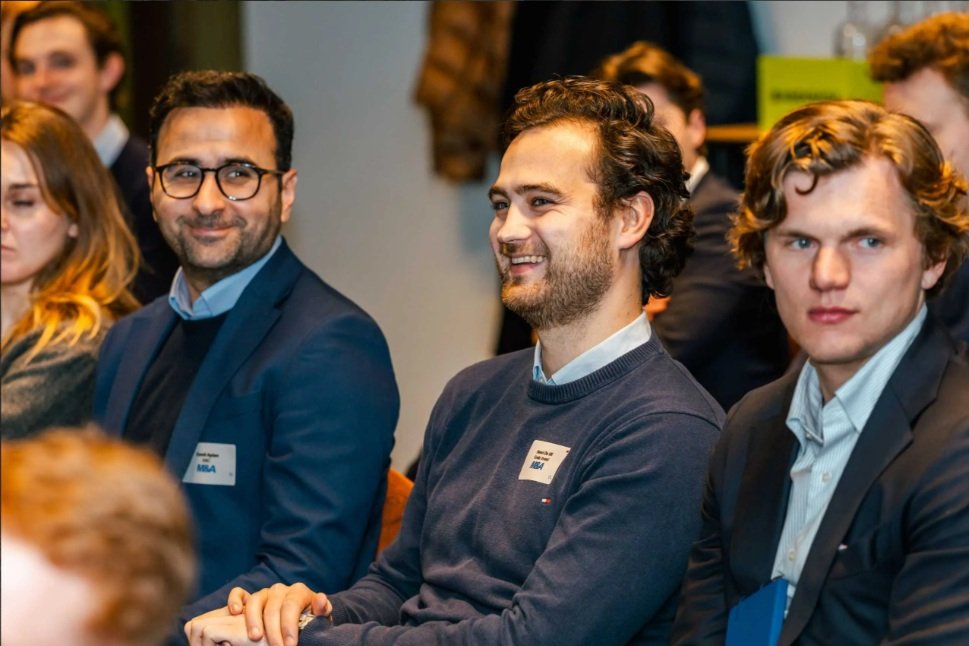
This event – sponsored by Ansarada – brought together the Young M&A Community Belgium to share ideas, insights and experiences. It offered the opportunity to join exclusive Peer consultations sessions and an engaging M&A Masterclass on the concept of value creation by top expert Leo van de Voort.
On 26 March, the Belgian Young M&A Community gathered for another afternoon brimming with ideas, insights and experiences. This time, Mix Brussels, situated on the edge of the Sonian Forest, provided the venue for interactive ‘peer consultation sessions’ and an inspiring keynote speech by Leo van de Voort. The key themes of the afternoon were recognition and value creation.
The afternoon did not open with a traditional presentation, but with a surprising format that immediately took the Young M&A professionals out of their comfort zone and encouraged them to reflect.
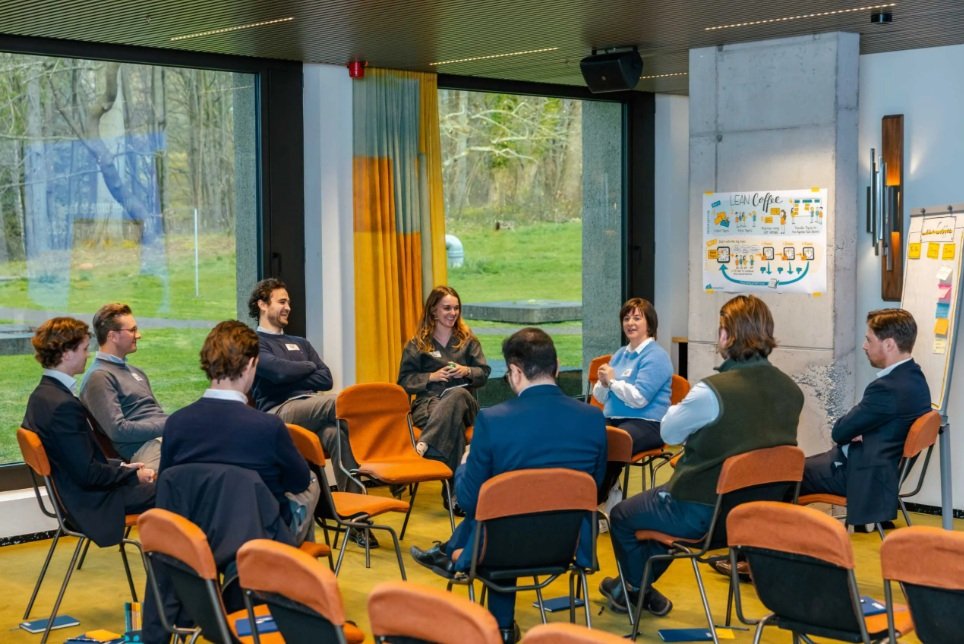
The moderators of the ‘peer consultation sessions’ from Green Elephant split the group up for a session based on the so-called Lean Coffee and Fishbowl methodologies. The aim? Not a one-way conversation, but a structured dialogue about the real challenges young professionals in the sector face. The principle behind this method? The best conversations take place at the coffee machine and in small groups.
In the middle of the room stood four chairs: the ‘fishbowl’. Anyone wishing to contribute to the discussion took a seat. Once they had spoken, they made room for someone else. The most pressing topics were selected via ‘dot voting’ (literally voting with dots). The result was an honest and sometimes confrontational discussion about the reality of the profession.
The topic that received the most votes was, of course, very familiar to the participants: how do you market yourself commercially as a senior associate within a Big Four firm?
A consensus emerged that business development is a long-term endeavour. It is about building a reputation and having the courage to approach your own peer group at client firms, rather than targeting the partner directly. “Simply be nice to everyone, from the intern to the partner.”
Shared challenges
The internal politics that young associates face within firms was also a hot topic. As you progress towards a senior role, the impact of ‘who you know’ within your own organization seems to increase. The feeling of a glass ceiling, where promotions and bonuses do not always seem to be based purely on meritocracy, was recognized by many.
“Simply be nice to everyone, from the intern to the partner,” was the advice. A practical tip was also shared: “If a client is satisfied, put the partner in cc. Make sure the decision-maker sees your successes without it feeling forced.”
The pressure of often impossible deadlines, not infrequently a result of incomplete information from clients, was a second theme that felt familiar. Clear communication appears to be the only key here: you are the expert in the field, so dare to call the client directly instead of emailing. “Explain what is needed to solve a problem that would otherwise never be resolved.”
The session concluded with a reflection on the skills required. According to the participants, the ability to make advice understandable to different disciplines – from legal to finance – proved to be the most valuable skill to master. The peer consultation demonstrated that, although competition in M&A is fierce, the shared challenges form a strong foundation for a close-knit community.
Value creation as a management challenge
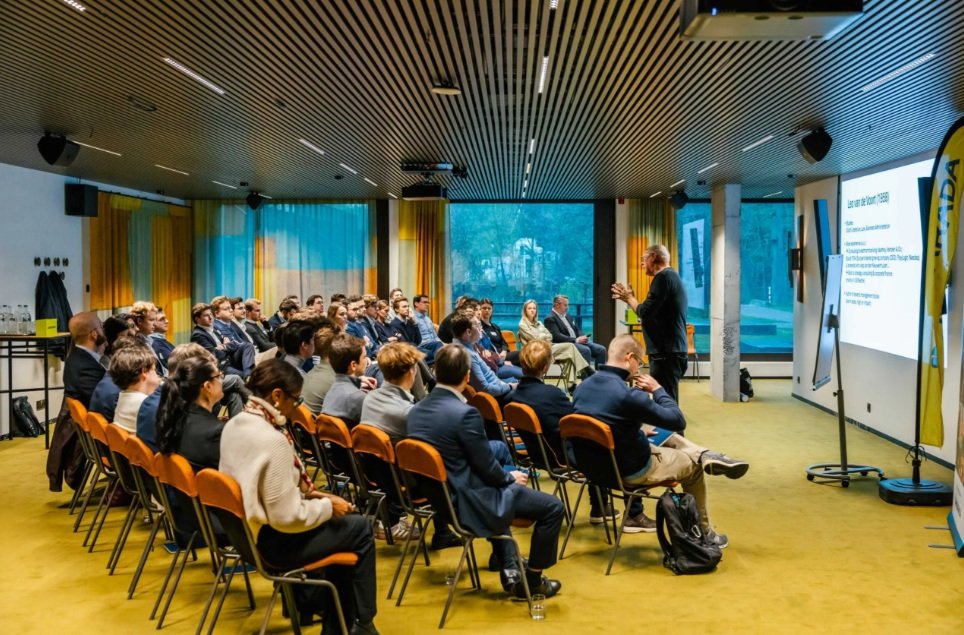
After the interactive warm-up, Leo van de Voort took the floor. The former bassist of Herman Brood & His Wild Romance immediately proved that he hasn’t forgotten his rock ’n’ roll roots. With a healthy dose of self-deprecation, he recounted how, following a failed singing career – during which the backing singers were on his heels trying to keep him away from the microphone – he decided to ‘get serious’ and complete three degrees (Dutch, Law and Business Administration). That marked the start of an impressive career in the Netherlands and the US.
“Don’t ask yourself what could go wrong, but rather what is possible to increase cash flow.”
Van de Voort took the audience on a journey through his life story, including his time in the boardrooms of Philips, Kempen & Co and various listed companies. His key message: M&A is too often about closing the deal and not enough about what happens afterwards.
“Restructuring is not a strategy”, he told the audience. “You create value by making choices.” Van de Voort argued for a new way of looking at acquisitions. “During a standard due diligence process, we look at legal, tax and finance to limit the downside risks. That is defensive”, he argued. “A radical shift towards value realization is needed. We should not be asking ‘What could go wrong?’, but rather: ‘What is possible?’”
The Philips lessons
Drawing on his experience at Philips, under the former and legendary directors Jan Timmer and Cor Boonstra, van de Voort explained how strategic focus unlocks value. He reminded the audience of Operation Centurion, the massive restructuring in which he himself was involved. At the time, Boonstra used the metaphor of a plate of spaghetti: if you pull on one strand, you have no idea what moves at the other end. That was the old Philips. The transition to a plate of asparagus – a culinary metaphor for a structure with separate, pure-play activities – was the only path to transparency and value.
It led to the sale of gems such as ASML and NXP. Although that is now sometimes seen as a mistake, at the time it was a dire necessity for cash. “Value creation also means having the courage to part with parts of your portfolio that aren’t performing to their full potential”, he said. He drew a parallel with the present: “Look at Philips’ current share price. That is a textbook example of value destruction caused by a lack of execution and a failure to address risks in a timely manner.”
Strategic levers
Van de Voort also shared a few crucial concepts that every young dealmaker should have in their toolkit. Starting with long-term cash flow potential. “Without that, a company is doomed to go under.” The potential for lock-in is also important. Think of software companies that tie hospitals to them for ten years via EPR systems. “If you can’t retain the customer, you’ll never realize the full value.”
Even if you follow the above principles to the letter, anyone unable to change tack quickly is also finished. As befits a Dutchman, van de Voort drew on an example from the world of speed skating. “When the market for wooden skates collapsed, the Viking brand used its expertise in wood-iron joints to make hand tools. That is survival through adaptability.”
We must therefore view brands as a platform and not as inextricably linked to a single type of product. “Bertolli, for example, realized that they could be more to customers than just olive oil. They launched sauces and spreads that proved popular with customers thanks to the brand’s recognition. That insight completely transformed the brand’s value.”
“Anyone can put together a PowerPoint with a roadmap, but who ensures that that one per cent purchasing advantage is actually achieved?”
Risk appetite
The highlight of the keynote was the discussion of Van de Voort’s concept of ‘risk-taking’. According to Van de Voort, deals often fail due to a lack of three things. “The imagination to envisage a different future for the company, for example. DSM (the chemical company, not to be confused with the kitchen manufacturer) is the ultimate example here: they had the courage to move away from heavily polluting bulk chemicals and transform themselves into a specialist in vitamins and fine chemicals.”
This led van de Voort to the importance of courage: “Courage: the daring to go against the tide, even when politics or the market are working against you.”
Finally, the ability to act and execute is crucial: “The ability to actually implement that 100-day roadmap. Anyone can create a PowerPoint, but who ensures that 1 percent purchasing advantage is actually achieved?”
A new generation
Van de Voort concluded with an encouraging message for the Young M&A community. Whereas the older generation was shaped by EBITDA multiples and stable cash flows, he sees the new generation as the driving force behind innovation. “You look at tech stacks, data talent and platform strategies. You are open-minded and dare to link things to more than just turnover.”
His final tip to the audience was equally practical and focused on potential opportunities: “If you hear that a company is going to reorganize: pick up the phone. Reorganizations are often a sign of impending failure, and that means assets need to be bought or sold. That’s where the opportunities lie for the dealmakers of the future.”
After the inspiring keynote, it was time for the third chapter of the Young M&A Forum: the networking session combined with a walking dinner. The themes – from internal politics to the ‘plate of asparagus’ strategy – lingered in the air for a long time, as did the day’s key takeaway: M&A is not a static process of spreadsheets and legal clauses. It is a dynamic game of psychology, strategic imagination and, above all, the courage to make real choices.