

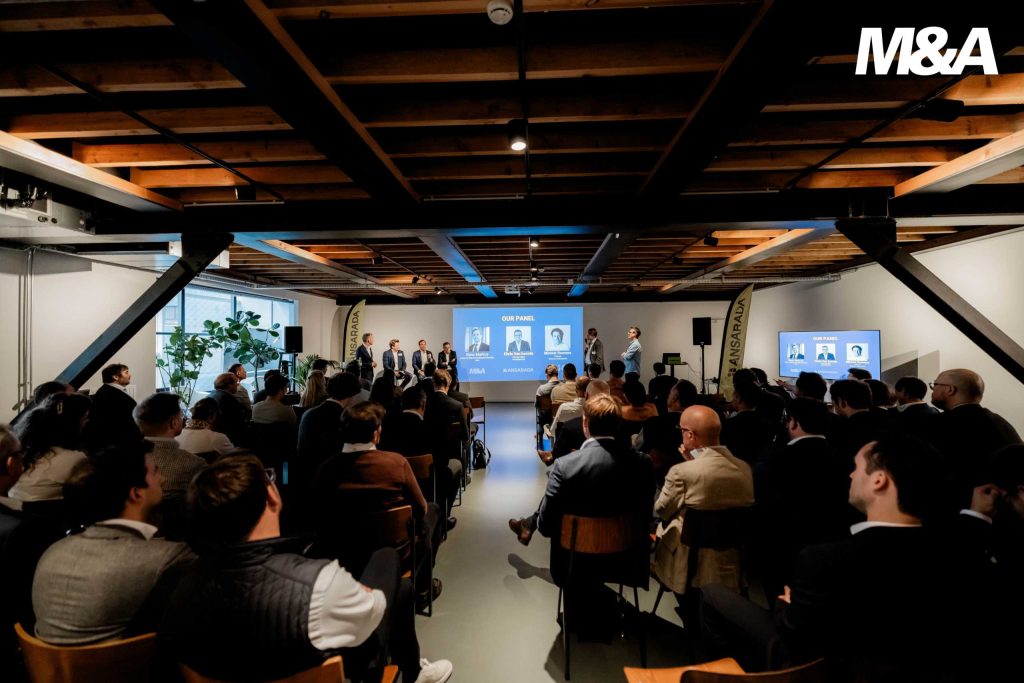
Why do some companies consistently create value through acquisitions, while others never quite realise the investment thesis behind them? That question set the tone for the M&A Strategy Forum, held Thursday, 24 September 2026, at iO's Antwerp headquarters – an evening that delivered a masterclass from two of Belgium's most admired growth stories.
After a full afternoon of roundtables with M&A directors (hosted by KooKoo Strategy) and a tax masterclass from Nancy De Beule (PwC), the crowd settled in for the main event: two Belgian world-class companies laying their M&A and integration playbooks on the table.
Melle Eickelhoff, founder of the M&A Community Belgium, opened the session with a dose of realism, but also optimism. “There's no shortage of gloom about the world economy right now”, he admitted, “but there's another story worth telling: that of entrepreneurs who buy, build and grow against the grain. In these times, it is all the more important to listen to these amazing stories and get inspired", he said.
What followed proved his point…
From basement website to European powerhouse: The iO playbook
First up: Collin J. Seyger (CFO at iO) and Roel Van Aelst (director of Strategic Events & Partnerships) telling the story of how a one-man web shop became a European AI powerhouse.
It's a genuinely remarkable arc. Founder Pieter Janssens started the company twenty years ago, building websites in his basement; today iO employs 2,000 people across Europe and has fully reinvented itself as an AI partner for design, marketing and technology.
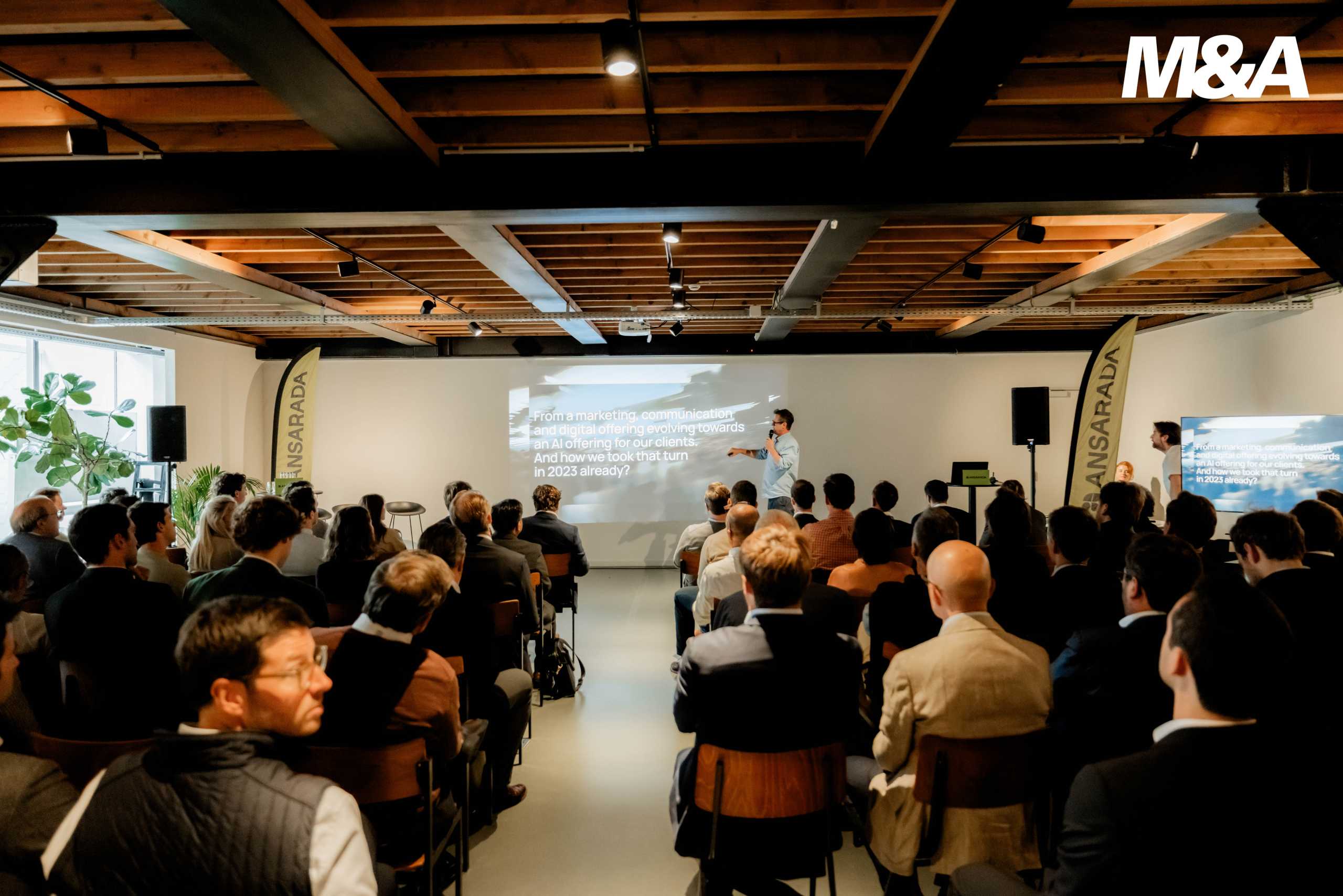
"AI completely changed our business model", Roel explained, pointing to Bonzai, iO's proprietary AI layer that helps clients move from experimenting with AI to actually implementing it. "The market is changing, and we wanted to become AI native. This was a huge shift for us, but the journey is never over. Change is the only constant."
That shift has already paid off in recognition, including the AI Pioneer Agency of the Year Award.
The company's transformation is as much a story of identity as of technology. Founded in 2006 as Intracto, it rebranded to iO in 2018 – the same year it kicked off its buy-and-build strategy and brought investor Waterland on board to fund both organic and acquisitive growth.
Three years ago, Collin joined as CFO to help drive the acquisition programme. "The buy-and-build strategy started with an ambition", he said. "We saw clients struggling with AI, working with all kinds of agencies to solve fragments of the problem. We saw the opportunity to bring these agencies together under one brand, to help companies implement AI faster and better."
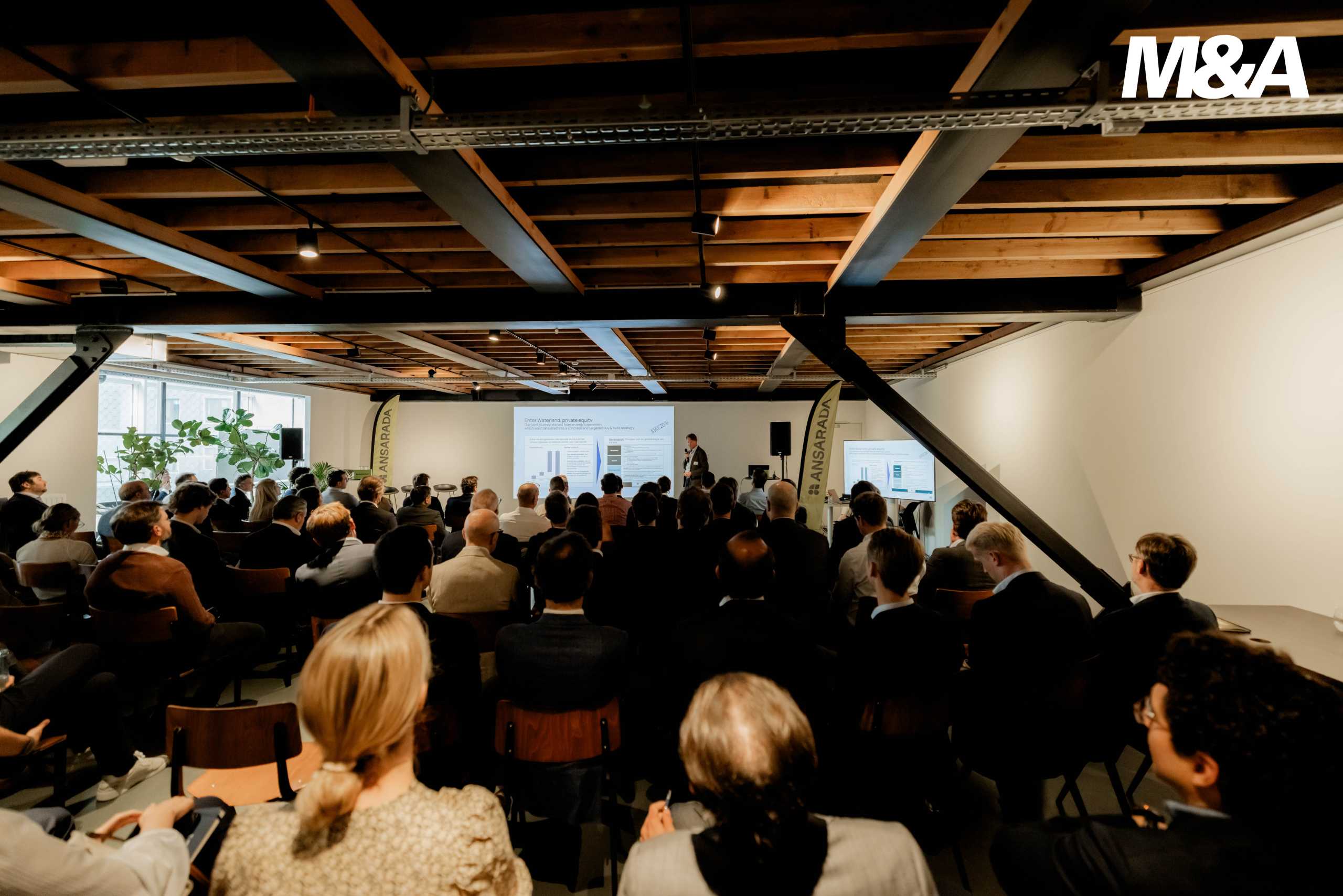
Talent, Collin stressed, is the real prize in any acquisition and talent only joins somewhere it wants to be. That philosophy shows up physically in iO's campuses, which replace traditional offices entirely.
Trust runs just as deep through the strategy. "Building trust with the entrepreneurs is absolutely essential", Colin said.
"Because if trust is lost, the deal will surely fail."
That trust is built through disciplined execution and relentless focus on integration. "We brought the acquired companies together in one office, and watched the magic of collaboration happen", Collin recalled. "We build relationships with owners who know this market well, and they also know other players who might want to become part of something bigger. Our deal team follows up on that."
Not every target makes the cut. He shared five criteria a company must meet to be considered: it must operate within iO's core business, show solid and healthy financials, have no clients or activities in exotic locations, be relocatable to one of iO's campuses, and show no excessive dependence on a handful of large clients in yearly sales.
In return, entrepreneurs get access to a broader client and capability platform, room to stay entrepreneurial and market-facing, and freedom from red tape.
One brand, one story
Roel then walked through the integration formula that has made it all stick. "First of all, we are one label, one brand: we integrate every dimension", he said. "Secondly, if you have 164 services, it's impossible to explain to the market. We changed it to one story, one clear proposition and we took it to the market."
Building that single story took relentless storytelling. "Are we there yet?" Roel asked rhetorically. "No, nor will we ever be. But we are ready to always adapt to new conditions and opportunities."
Belief before the deal
Collin closed with the lessons that matter most: trust, and belief. "It is about a belief for them that they can build a better company with us than when they remain standalone. They will remain entrepreneurs, and that's what we want. But the cultural fit needs to be there."
None of this happens overnight, either. "I like people", Collin said. "There must be an emotion. Especially with smaller companies, it's their child – there's more emotional involvement. We take the time: those deals do take longer to reach the contract phase."
There's also a quieter, more technical lesson behind the scenes: iO built a shared data lake with uniform definitions across the entire company. "When I see a number, I know exactly what is behind it", Collin said.
So is there an end game? Someone asked as much during the Q&A. "There is no end game", Collin replied. "We are in five countries. Our CEO is 42. He wants to keep going."
The acquisition strategy, Roel added, simply follows where clients' needs go next: "With the AI shift, the objective is always: what value can we create for the client."
And when a panel member pushed on how you actually measure something as fuzzy as culture and DNA, Collin gave an answer few CFOs would: "The best way to measure people is by feeling."
Roel agreed:
"Of course we have our systems and surveys, but you measure best by walking around the campuses and feeling the sentiment."
Acquiring for growth, integrating for value: the SD Worx story
The second story of the evening was every bit as compelling: the buy-and-build trajectory of SD Worx, one of Europe's leading HR and payroll solutions providers.
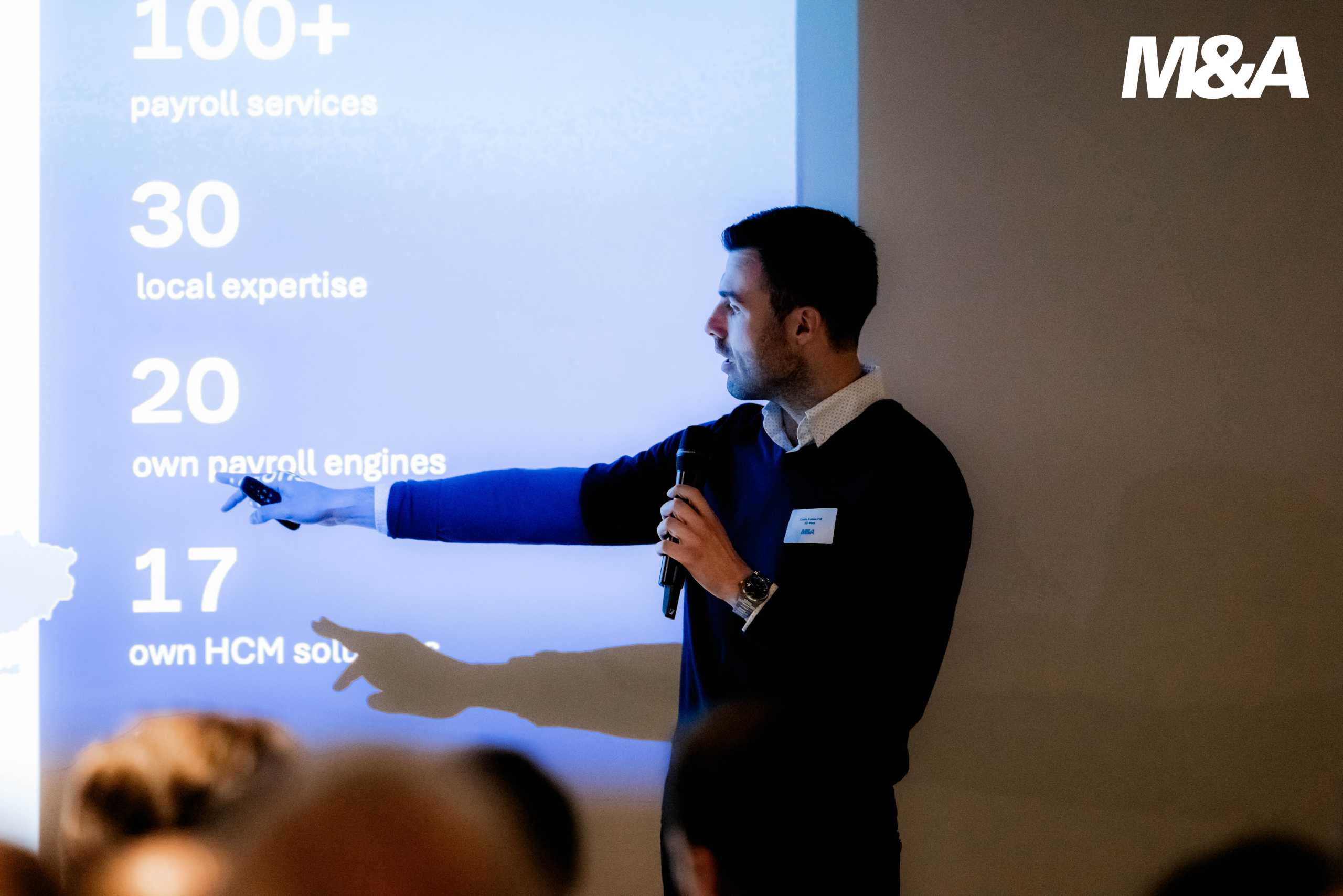
SD Worx is a household name in Belgian HR – with roughly 80 years of history, almost 10,000 HR experts, and operations spanning 26 countries, and its M&A track record backs up the reputation: 24 acquisitions in just six years.
Csaba Farkas-Pall, head of Strategic M&A Integrations at SD Worx, made clear from the outset that integration isn't an afterthought – it's the whole game. "Integration is where the hard work is being done", he said. "It is the way in which one plus one can truly equal three in the end."
Csaba broke the company's rationale for acquiring into three motivations: adding new services, growing within existing countries, and entering new ones. "The acquisitions are very different in nature, from very small to large companies", he said.
The art of managing change
Csaba then walked the room through SD Worx's integration playbook – three phases, tackled in a very deliberate order: people, then processes, then technology. "It always starts with people", he said. "We want to answer all their questions: what does the acquisition mean for them? It is crucial to have leadership behind you during this process, to in the end get to the point where people want to be part of this."
Only once that foundation is in place does the team move to processes – operations, finance, HR, pricing, efficiencies – before tackling the technological integration last. "When you have the processes clear, it is much easier to do the technological integration."
Throughout, the guiding question stays the same: what's the right amount of change? "When you go too fast, you will get change fatigue", Csaba warned.
"You need to find the right amount of change to keep people motivated and clients happy."
And integration should never happen for its own sake – it has to serve every stakeholder. Owners need revenue growth, synergy and improved margins; customers want better service and propositions; and to deliver both, leaders and employees need real clarity: what's changing, what's staying the same, and what's in it for them.
From the PMI team's perspective, success means clean ownership transfer, a clear value path, aligned leadership, and a business that keeps running.
Csaba closed with five hard-won lessons:
1. Discovery – "Understand reality before committing to the integration. Really validate all your assumptions. In every acquisition, there are things that are missed."
2. Common strategy – "People can deal with changing plans, but they struggle with a changing destination."
3. Communication, communication, communication – "You can never do too much. You share a message, and people will remember ten percent of it the next day. Repeat, repeat, repeat, so there's no chance to miss it. If there is silence, people will create their own assumptions and reality."
4. Landing spot – create a place where the acquired company can genuinely land, manage expectations, and ensure there's real connection even when much more work remains.
5. Flexibility – "Reality will kick in. Expect things to go differently. Sit down with management: what priorities are okay to swap order?"
He summed it all up simply: "How can one plus one equal three? Start small, understand what you bought, define what success looks like, check your assumptions, build confidence, repeat where you're going, and create clarity and ownership along the way."
Read more: Csaba Farkas-Pall provides a sneak peek of his post-merger integration playbook
Drinks, deals and what's next
The two success stories set the tone for the evening that followed: drinks, delectable canapes and plenty of networking. The reaction was unanimous. "Integration usually doesn't get so much attention", one attendee remarked, "so it was really valuable to hear."
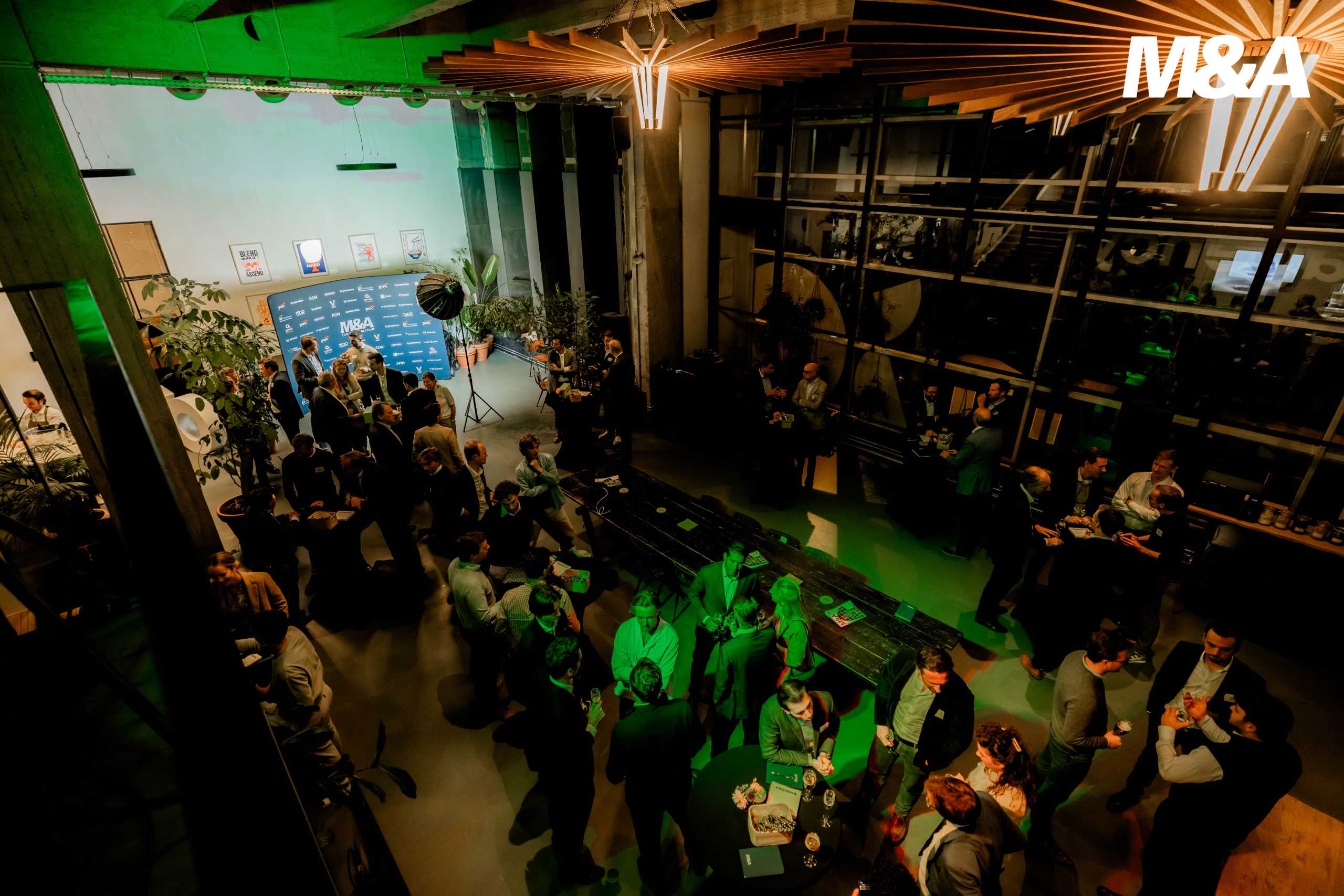
Members and partners of the M&A Community Belgium lingered long into the evening at iO's atmospheric Antwerp office, trading their own integration war stories over excellent food and drink.
Revisit the highlights of the evening via the photo gallery.
It was, by all accounts, a near-perfect edition of the Strategy Forum and most attendees are already counting down to the next one: the Private Equity Summit, October 22, at Loyens & Loeff in Brussels. There's still time to register!
-2.png?upscale=true&A%20Event%20Introbeeld%20(5)-2.png&width=1120&upscale=true&name=M%26A%20Event%20Introbeeld%20(5)-2.png?upscale=true&A%20Event%20Introbeeld%20(5)-2.png)
A big thank you to principal sponsor, Ansarada, to partners PwC Belgium and Kookoo Strategy for contributing their expertise, to the speakers of iO and SD Worx, and to iO for hosting this M&A Community event.

