

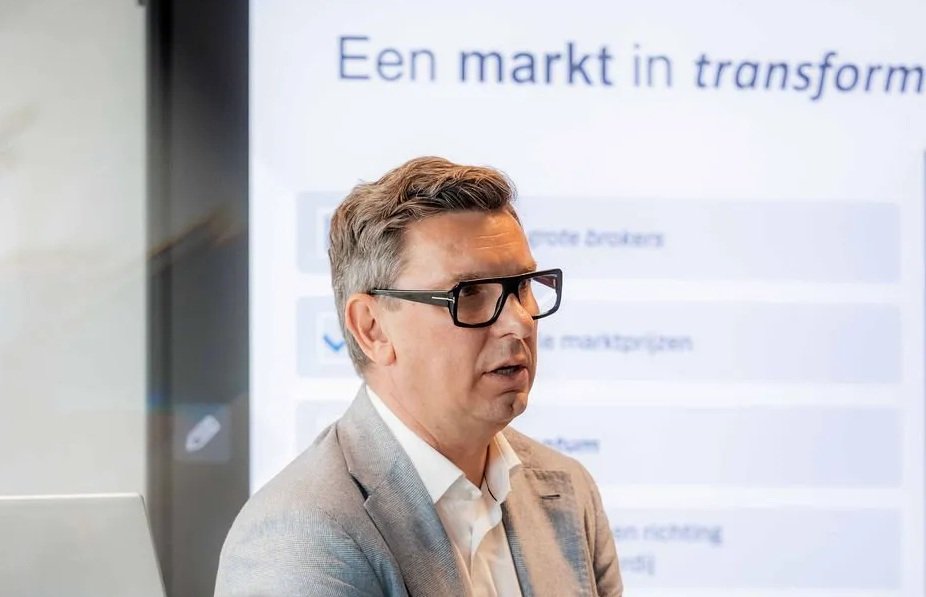
His journey – from a struggling startup to a 40 million euros revenue group with 300 employees – underscores the transformative potential of a clear vision, smart acquisitions, and relentless innovation.
When Roel Druyts took the stage at this year’s M&A Summit, the room was packed with entrepreneurs, investors, and industry professionals eager to hear how a small real estate office in Turnhout, Belgium, transformed into a national powerhouse in real estate, insurance, and mortgages.
Druyts, the CEO of Hillewaere Group, didn’t just recount a success story; he offered a rare, unfiltered look at the trials, triumphs, and strategic pivots that defined his company’s rapid ascent.
From humble beginnings to a bold vision
Druyts began with a candid reflection on his early days. “I rented a tiny office, drove to IKEA, picked up some furniture, and hung photos of friends’ and family’s homes in the window pretending they were for sale”, he recalled. For the first ten months, nothing sold. “It was incredibly tough to get started”, he admitted, but persistence paid off.
His first sale came, then another, and soon he was not only selling homes but also navigating local politics as a councilor in Turnhout. “That gave me some useful connections”, he said with a smile.
The real turning point came in 2007, when a competitor – who wanted to focus on property development – offered Druyts his real estate and insurance business. “I was 29, with no money”, Druyts said. “But he told me, ‘I want you to take it. You’ll pay market price, but I’ll go to the bank with you.’”
The deal, worth millions, was sealed with private backing, a rarity Druyts still finds remarkable. “His son is still one of my best friends, and they remain one of our biggest insurance clients”, he noted.
The power of strategic acquisitions
Druyts’ approach to growth was clear: in a fragmented market, consolidation was key. Hillewaere began acquiring smaller offices, building a scalable platform with centralized support, strong commercial teams, and a premium positioning.
“We didn’t just buy companies; we built a system”, he explained. By 2020, Hillewaere had grown to 90 employees and 11 million euros in revenue, but Druyts knew they needed to scale further. “We were bursting at the seams”, he said. “Our finance department was just my bookkeeper of 15 years. IT was a mess. HR was one person who didn’t even like insurance.”
The solution? A partnership with private equity. Druyts approached Belgian firms but found little interest. “They all said, ‘No one’s done this in Belgium. Why buy 20 insurance offices? Where’s the efficiency?’”
Then, in 2020, Heilbron – a fast-growing Dutch insurance group backed by private equity – reached out. “They wanted to enter Belgium, and I wanted a financial partner to accelerate growth”, Druyts said. The deal was struck just as the pandemic hit, adding a layer of uncertainty, but also urgency. “I realized I was carrying all the risk alone. A strong financial partner was exactly what we needed.”
Navigating the challenges of integration and culture
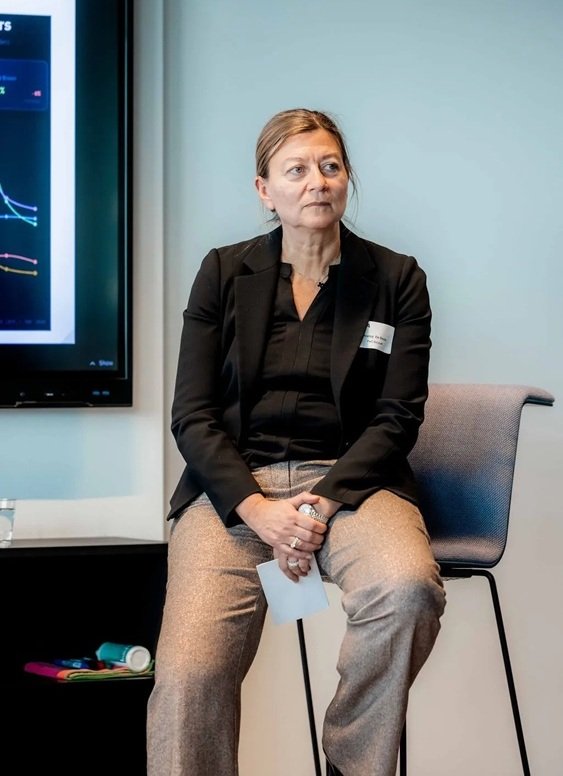
Nancy De Beule, Tax Lead Partner at PwC and the session’s moderator, pressed Druyts on the human side of acquisitions. “How do you keep acquired teams motivated and committed?” she asked. Druyts emphasized transparency and incentives. “We offer former owners a stake in the holding company”, he explained. “They become partners, not just employees. That psychological shift is crucial.”
He also stressed the importance of clear communication. “We tell everyone: things will change, but only to improve. We explain why and how.”
Druyts admitted that not every integration is smooth. “Some people leave, but most stay. We’ve had to let go of a few who couldn’t adapt, but overall, the model works.”
The role of technology and AI
Druyts is bullish on technology’s role in the future of insurance. “We’re still using archaic processes”, he lamented. “It takes ten steps to insure a car, but only one to buy a fridge online.”
Hillewaere is investing heavily in IT, building a unified data platform and automating back-office tasks. “We’re using AI to transcribe calls, draft emails, and even predict churn”, he said. “Our goal is to automate 60 to 70 percent of our back-office work in the next three years.”
The potential is enormous. “AI resets the playing field”, Druyts argued. “You don’t need armies of programmers anymore. Put a few smart people in a room for a week, and they can build what you need.”
He pointed to recent experiments where AI drafted client responses using data from past interactions. “It’s surreal what’s possible”, he said.
Looking ahead: Exit readiness and market opportunities
De Beule asked about ‘exit readiness’ – the central theme of this M&A Summit. He’s in no rush. “I’m 49. I want to keep building. Whoever sits across from me in two or three years will have to offer something compelling – not just money, but a shared vision.”
“The best is yet to come”, Druyts, ever the entrepreneur, said. While Hillewaere’s exact valuation isn’t publicly disclosed, the company’s rapid growth – from 11 million euros to 40 million euros in revenue in just three years, with plans to double that figure – reflects its ambition and the confidence of its private equity backers. “We’re not building for a quick exit”, Druyts clarified. “We’re building for the long term, and the right partner will recognize that.”
Druyts also addressed the Belgian market’s unique dynamics. “Belgians value service over cost”, he explained. “They want someone to handle things for them, not just the cheapest option.”
This cultural nuance shapes Hillewaere’s strategy, especially as they explore online insurance – a model that’s thrived in the Netherlands but remains nascent in Belgium.
Lessons learned and the road ahead
Reflecting on his journey, Druyts shared his biggest lesson: “For years, I felt like I was pulling the cart alone. Now, I have a team of competent people building something together.”
He admitted to a ‘lost period’ between 2014 and 2017, when growth stalled. “I was doing the same things, but not evolving. The last few years have been energizing because the possibilities are endless.”
As for the future, Druyts is focused on two fronts: continuing the buy-and-build strategy and investing in technology. “We’re not just buying companies; we’re building a platform”, he said. “The next five years will determine who stands and who falls in this sector. Scale and tech will decide the winners.”

