


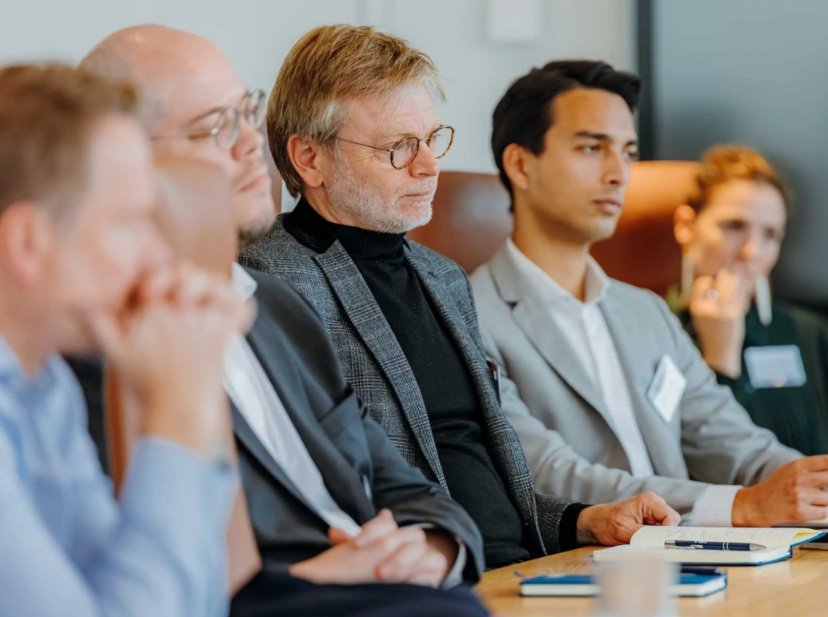
During the recent Private Equity Summit, a roundtable discussion took place on a provocative topic: Is ESG dead? How do investment managers perceive environmental, social, and governance (ESG) principles today? Is it just a passing trend, or is it transforming into something new?
The conversation explored how LP expectations, regulatory changes, and shifting market realities are reshaping ESG strategies in private equity.
The session was moderated by Michiel Deturck, Managing Partner at Vendis Capital, who also coined the discussion’s title. But did the PE managers agree with it?
ESG: Not dead, but evolving
“For SMEs, the topic is certainly not dead”, one PE manager said. “It is changing, though. From a private equity perspective, sustainability remains a lever you can pull to create value. This is still the case, so ESG is not dead.”
While all participants agreed that ESG continues to matter, several noted that the level of attention has decreased. “Take LPs”, one remarked. “It used to be in every sentence. Now, the focus has shifted and defense and resilience are taking center stage.”
Too much bureaucracy, not enough practicality
Another participant argued that ESG should still be top of mind for every manager and investor. “Yes, Europe went overboard with bureaucracy”, they said. “However, ESG has become part of our DNA, and that won’t change. We just need to reduce the administrative burden.”
Others echoed that sentiment: while ESG frameworks may be cumbersome, the underlying principles remain essential. “It started out very idealistic”, one said. “Now, we need to make it pragmatic. ESG should be about improving company quality, reducing long-term energy costs, and lowering insurance risks.”
The ‘E’ is here to stay
Some participants acknowledged a shift in focus away from ESG, particularly in the U.S., but stressed that the environmental dimension remains crucial.
“Funding the energy transition and building the future is still a major opportunity for private capital”, one manager noted. “ESG may not be favorable in the U.S. right now, but not everything revolves around the U.S.”
“The anti-ESG movement won’t disappear with Trump”, another added. “This sentiment will remain for some time.”
Despite these headwinds, the group agreed that society still needs ESG, and it must continue, even if it’s no longer as fashionable as it once was.

Regulation: A growing burden
The European regulatory framework drew sharp criticism from the group. “It’s extremely costly to implement these ESG rules”, one investor said. “You need a PhD just to understand them, and an army of lawyers to comply. That’s not sustainable.”
In short, the participants called for a new system where ESG principles are truly embedded into investment and operational practices, rather than imposed through rigid bureaucracy.
From box-ticking to real impact
How are PE managers putting ESG into practice within their portfolios? “We start with the desired outcomes for each portfolio company”, one investor explained. “We conduct resilience tests by running through various scenarios. We ask: have you considered how to withstand extreme events? Are we aware of the harm this company may cause to the environment or society? What’s the cost of switching to renewable energy?”
When asked directly whether ESG is dead, one participant summarized the room’s sentiment: “Yes, the box-ticking version of ESG is dead. And that’s a good thing. But climate change is real, the energy transition remains a challenge, and resources are increasingly scarce. So, we need to replace the current framework with something better.”
“Yes, the box-ticking version of ESG is dead. And that’s a good thing. We need to replace the current framework with something better.”
A positive outlook: What comes next
The roundtable concluded on an optimistic note: ESG in its rigid, bureaucratic form may be dying, but a more meaningful version is emerging, one that focuses on measurable impact and long-term value creation.
Moderator Michiel Deturck reminded participants of the broader context: “All the parameters of the planet are going down, and as investors, we must take that into account. For example, companies that rely heavily on air travel are too risky in our view. Prices may rise, or society may simply reject such practices. That’s how we evaluate business models.”
Deturck summed up the discussion neatly: “Solutions to the problems become more valuable, and contributors to the problems become less valuable.”
Conclusion
So, is ESG dead? Not quite.
The consensus among private equity managers is that the old, checkbox version of ESG is fading, making way for a new, more pragmatic approach – one grounded in resilience, responsibility, and long-term value creation.

