

Antwerp startup Noah, which maps the AI potential inside companies, has raised €800,000 to expand its team of senior ex-consultants and grow to €2 million in recurring revenue.
In the wake of any major enterprise-wide AI transformation or integration, finding the promised synergies, identifying operational bottlenecks and setting a new digital roadmap usually falls to consultants, who arrive with established frameworks and run workshops with a select ten or twenty stakeholders to decide the entire organisation’s technological fate.
This top-down model has fueled the advisory industry for decades. But according to Noah founder, Denis Leysen – who spent four years at DataShift guiding companies through data governance before the generative AI boom – at a standard rate of €1,500 per consultant per day, it’s also expensive and slow in an era when speed is crucial. Not to mention, while consultants provide immense value in high-level strategy and face-to-face negotiations, human interviews usually hit a wall when it comes to mapping and scaling the granular realities of a 1,000-person organisation, and can be inherently coloured by the interviewer's own ideas.
So, in 2024, Denis left DataShift and decided to reinvent how enterprises extract insights from their own people, building a “central operating system for digital transformation teams”, called Noah, which deploys conversational AI to conduct hundreds of voice interviews simultaneously.
To date, the startup has carried out more than 8,000 internal interviews for its clients. At the pace, depth and daily rate of a human consultant, that equates to more than €12 million in advisory fees. And, because there is “no human in the loop”, the AI doesn't unconsciously guide the subject toward a predetermined thesis. Instead, it allows for a genuinely bottom-up business case. If 80 out of 100 people flag the same administrative bottleneck, the roadmap builds itself. Noah then cross-references these internal pain points with its proprietary database of market research, delivering insights on how much time and money a specific AI implementation could save.
At pharmaceutical giant UCB, for example, Noah successfully mapped the key processes of the entire quality assurance team in a single week. For a major industrial player, the platform built a fully quantified, two-year AI implementation roadmap in just two weeks, interviewing over 100 employees. Retailer Delhaize has used the tool to completely rethink and co-prioritise internal processes, while other major enterprises like Water-link and Sweco have also signed on as clients.
Denis clarifies that Noah does not want to replace consultants.
“We do not deliver a service. We just provide the requested insights and ensure they remain up to date, so consultants and managers can make more informed decisions, faster.”
Finding the right team of consultants
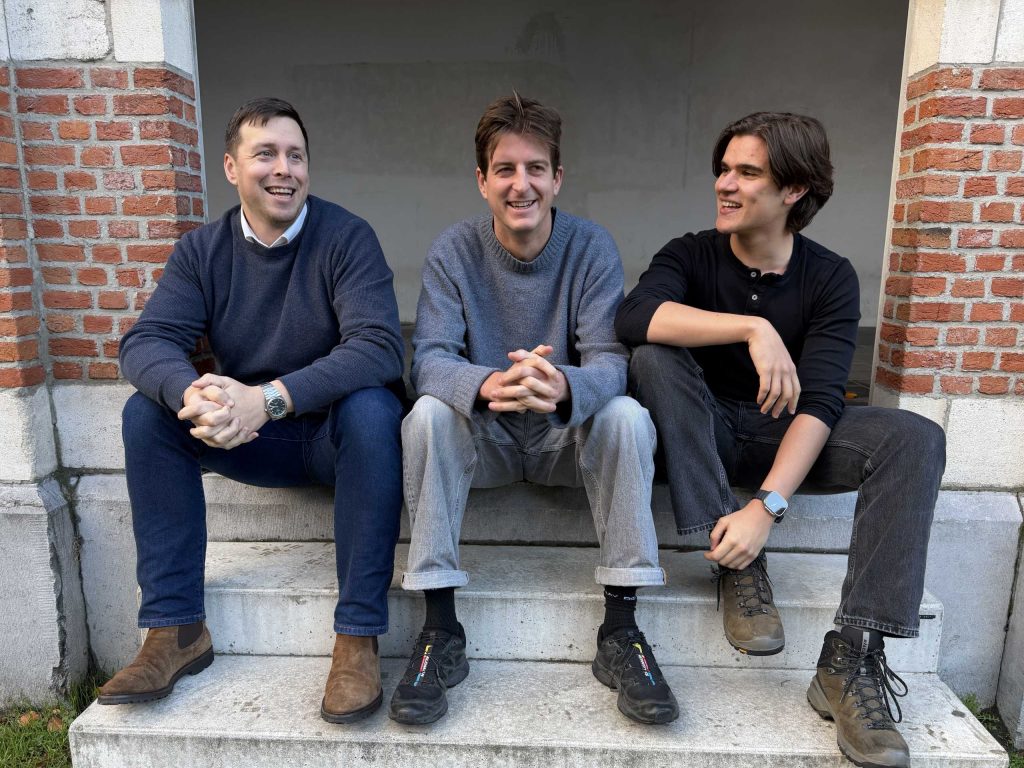
“I’ll be honest, in the very beginning, being an entrepreneur came with way more downs than ups and I didn’t have a founding team yet,” Denis reflects. César Van Leuffelen (CPO) and Tom De Smedt (CTO) came on board in the summer of 2025.
“Tom approached me as a client initially while he was working as a data and AI manager, where he experienced exactly the same issue. They had certain ideas, did some workshops and brainstormed, but it was still unclear where AI would have the biggest impact in their processes,” Denis shares. “He was very curious about how everything worked, then one chat led to another, and he decided to jump on board.”
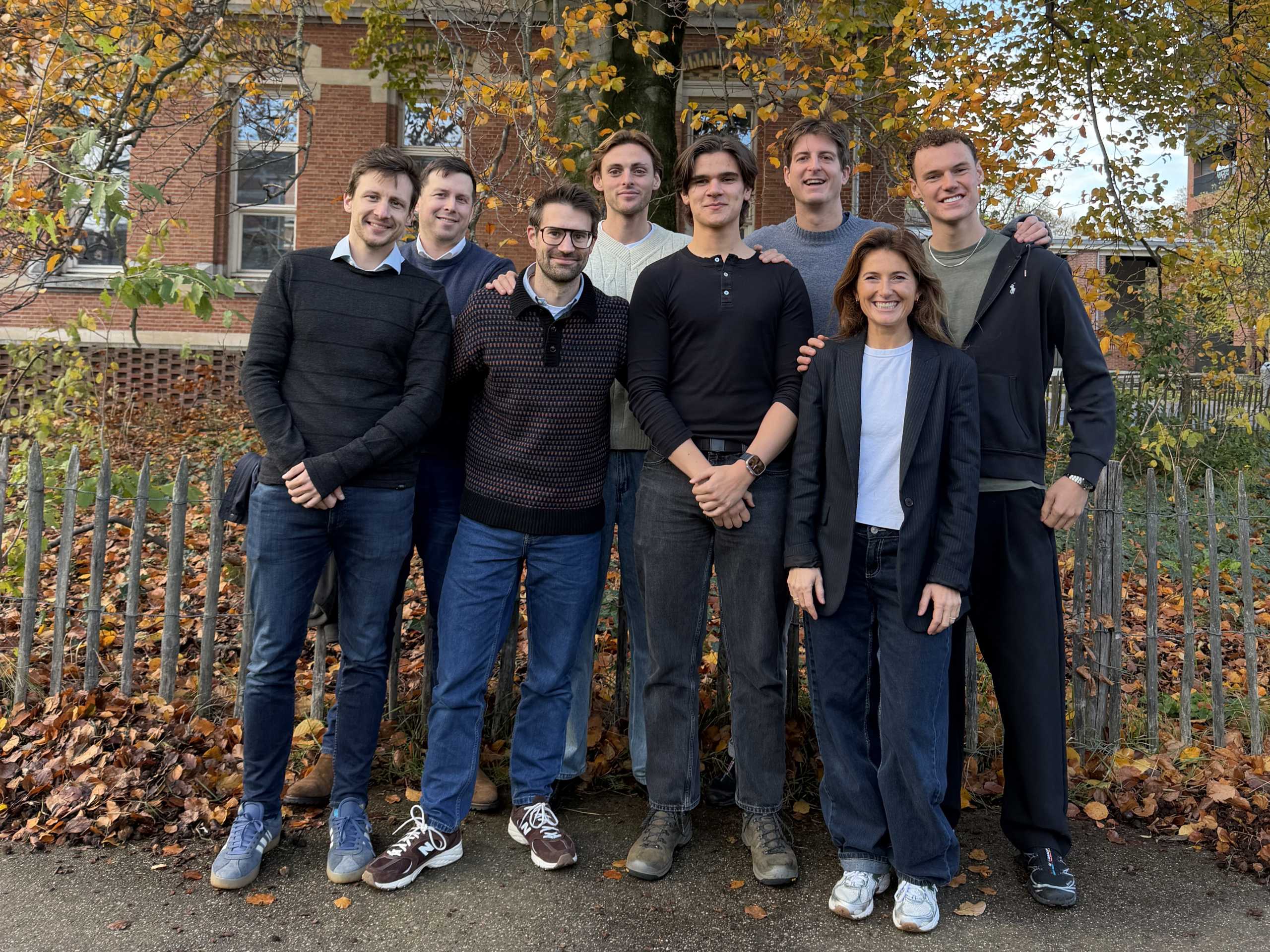
In the meantime, he also met César through the Y Combinator matchmaking platform. “What really clicked for the three of us was that we shared the same vision of how digital transformation should happen in the future,” Denis notes. Together, they have scaled the team to eight people (in 2026), strategically hiring ex-consultants and startup veterans from Belgian scale-ups like Showpad and Rydoo; including Roel De Wever as head of sales, Charlotte Driessen as head of marketing, Benjamin Huyghe as founder’s associate, Patryk Radkowski as a sales and marketing specialist and Nick De Smedt, in charge of compliance and cybersecurity.
The team’s core advice for companies – and their advisers – looking to transform is to stop hunting for the sexiest, most complicated AI use cases first. “What we see in the data is that the actual high-value use cases will typically come from the very boring, repetitive tasks in administrative functions, which are often overlooked.”
Many angels lead the way
Noah has gained a lot of traction since its founding, much of which was hard to capture with just the founding team. “We needed a larger team – especially from a sales perspective – to have more conversations and to accommodate the new demand, as well as – from a development perspective – to manage client requests and questions,” Denis says. “We thought about potentially bootstrapping it because of the high demand. But, while we might have seen some conversion, we ultimately needed to go faster; the technology market is moving so quickly that every single day, you have new tools and models.”
While Noah might not have any direct competitors right now, the 2020s have been evidence enough that things can change in an instant. With this in mind, the three founders decided the best way to grow fast was through a funding round backed entirely by a syndicate of business angel veterans from the banking, insurance and pharmaceutical sectors. Denis elaborates:
“We believe that many small angels can get us many introductions into larger enterprises.”
Besides introductions, the angels – who have careers of 30 to 40 years – also provide Noah with the credibility they need when dealing with big enterprises. “We really love the angels who challenged the product and gave us new insights on how they would have used it in their companies,” Denis continues.
Putting the proof in the pudding
The team at Noah is targeting seven figures of annual recurring revenue by the end of 2027. Hitting that milestone will serve as the “trampoline” for a larger venture capital round in 2028, paving the way for expansion into the US or the Middle East. Until then, Noah is perfectly content doing the heavy lifting in the background.
And while Noah's primary mission is driving broader enterprise AI transformation, its ability to instantly map hundreds of employee workflows to insights makes it an incredibly powerful tool for scoping post-deal synergies.

