
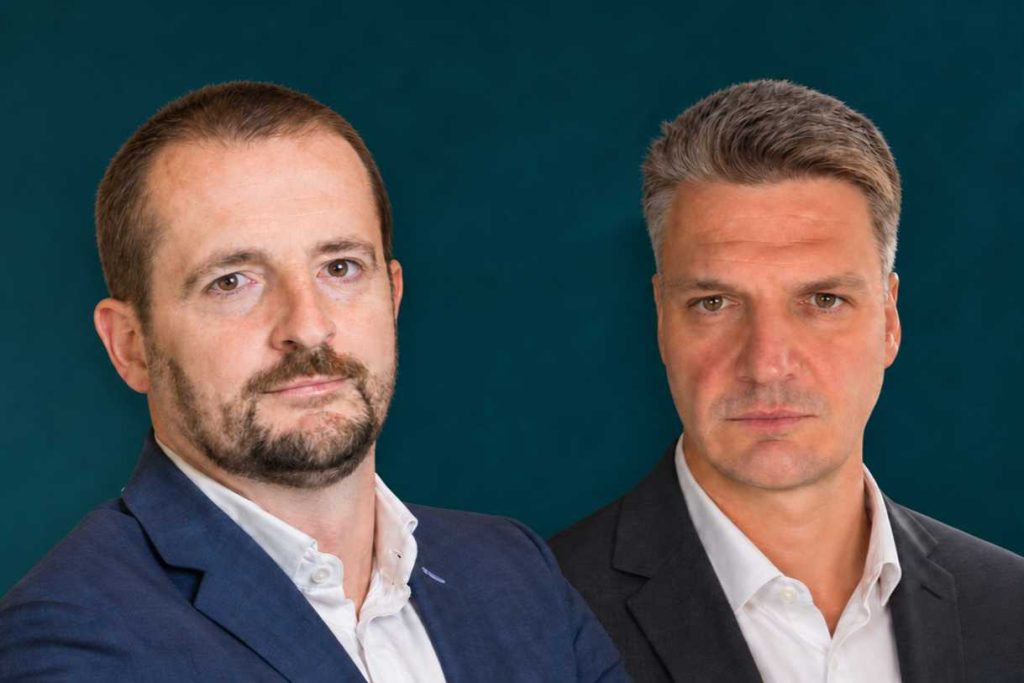
Standard Investment’s Alain Biebuyck and Quorum Law’s Davy Gorselé explain how a fixed-fee, repeat-adviser model is changing the economics of add-on acquisitions, and why they expect more of Belgian mid-market M&A to follow.
Oculus Group’s arrival in Wallonia, with the acquisitions of Osiris Daout in the Province of Liège and Optique Lefèvre in Charleroi, followed a buy-and-build model that its backer, Dutch private equity firm Standard Investment, has refined across fragmented healthcare retail markets in the Benelux. “We like fragmented markets where strong local businesses can benefit from professionalisation and scale, without losing the qualities that made them successful in the first place,” explains Standard Investment managing director Alain Biebuyck.
“Belgium's optical market is an attractive market for a buy-and-build strategy. It remains highly fragmented, with a large number of successful independent opticians, often built around strong local entrepreneurs and longstanding customer relationships.”
The private equity firm plans to create a leading, premium group of independent opticians in Belgium, combining these businesses' strengths with the benefits of a larger platform. A crucial part of this is a partnership model with the founders themselves. “We want the people who made these businesses successful to remain involved, retain their entrepreneurial freedom and participate in the value created by the larger group,” Alain adds.
Optique Lefèvre and Osiris Daout are excellent examples of what Standard Investment is looking for. Both are among the leading high-end optical businesses in Wallonia, with strong local reputations and established entrepreneurial teams.
“For us, buy-and-build is not simply about acquiring more locations. It is about building a stronger and more profitable group, with each acquisition contributing to that objective.”
Alain notes that the industry is becoming increasingly sophisticated. “Technology, equipment, product innovation and customer expectations are driving higher investment requirements, while running an independent business also comes with an increasing administrative and operational burden.”
Standard Investment believes a larger group can make a meaningful difference by providing purchasing advantages, operational support and access to shared resources, allowing entrepreneurs to spend more time on what they do best – serving their customers and developing their businesses. “Importantly, our ambition is not to turn successful independent opticians into a standardised retail chain. We want to preserve their entrepreneurial spirit, local positioning and customer relationships.”
Predictability & preparation
The requirements and considerations for a buy-and-build strategy differ significantly from those of a one-off transaction. “For buy-and-build strategies, you need a legal adviser that can handle a recurring flow of acquisitions, work with a consistent transaction framework and move quickly without compromising on quality,” says Alain. “They also need to understand how the individual transactions fit into the broader structure and operating model of the group.”
Behind both deals was a Quorum Law team led by managing partner Davy Gorselé, which stood out to the private equity firm for two reasons:
- They have the capacity and team depth to support multiple transactions, including when several deals are progressing simultaneously.
- They have extensive practical experience with buy-and-build strategies and, in addition to the legal aspects, understand the operational realities and importance of efficiency.
With this combination of capacity and experience, Quorum Law worked under a fixed-fee, repeating arrangement that the firm is increasingly offering to private equity clients. “Private equity houses budget everything – the acquisition, the financing, the integration. Legal fees were often the one line item they couldn’t predict, and that frustrated them. A fund manager presenting a deal to the investment committee wants a number, not a range with an hourly rate attached,” Davy reveals.
Alain backs this statement, explaining that predictability was a key consideration when Standard Investment chose Quorum Law as its adviser: “When pursuing a buy-and-build strategy, particularly one involving smaller acquisitions, transaction costs are an important component of the overall investment case. We need to understand these costs upfront, as they directly influence the economics of an individual acquisition and ultimately determine which deals make sense for us.”
A fixed-fee arrangement lets the private equity firm incorporate legal expenses into its investment evaluation from the start and set a clear minimum threshold for an attractive transaction. “Without this predictability, a relatively small deal could end up carrying disproportionately high legal costs, potentially eroding a significant part of its expected return,” Alain adds.
What makes this possible? “Once we’ve done the platform acquisition, we understand the group structure, the financing documents, the management incentive plan and how the sponsor likes its SPA drafted. As such, the fourth or fifth add-on in the same sector is not a new project, but a variation on something we already know well,” Davy elaborates.
“Billing by the hour would mean charging the client for our learning curve again and again, when that learning curve has already been paid for.”
Alain says this also makes the deal more efficient. “With a clear framework in place, both teams can focus on the transaction itself rather than spending time discussing fees and budgets for every individual deal.”
There’s a relationship benefit to it, too: “With a fixed fee, clients call us early and often, because a phone call doesn’t start a meter running. That makes us better advisers; we hear about issues before they become a bigger problem and we’re part of the deal team, rather than a cost they try to keep to a minimum.”
Scope: the new billable hour
Alain agrees with Davy, emphasising that a clear understanding of each transaction’s scope is crucial. “Where a deal follows the standard transaction framework, we stick to the arrangements agreed with Quorum, as different commercial arrangements with sellers do not necessarily mean the entire legal process needs to be treated differently,” he continues. “The objective isn’t to force every transaction into exactly the same template, but to maintain the discipline and cost predictability of a fixed-fee approach while allowing sufficient flexibility for individual circumstances.”
Any dealmaker knows not every acquisition is identical. He points out that some transactions require specific structuring or involve additional complexity. To manage this, Quorum Law prices on a clearly defined scope and is explicit about what falls outside it. “A typical add-on fee covers a defined set of work: a red-flag due diligence on agreed areas, the SPA based on our client’s own template, ancillary documents, signing and closing. We base it on a few factors we can assess at the outset: the target’s size and number of entities, the sector, whether there’s real estate or regulatory complexity, and whether the seller is a founder or a professional party with its own advisers.”
Quorum agrees with clients in advance how they’ll handle things they genuinely can’t foresee. For example, if due diligence uncovers litigation, a tax issue, or an unplanned W&I insurance process, that’s a pre-agreed supplement. “We know their investment committee timing, their risk appetite, and which points they’ll concede and which they won’t. That removes a lot of internal back-and-forth,” Davy says.
Furthermore, each of Quorum’s clients has a stable core team, so the knowledge stays with the people doing the work. “Associates handle the standardised parts efficiently, while partner time goes where judgment is actually needed.”
However, hours do come in when Quorum measures time spent on fixed-fee matters internally to check whether its pricing is right and adjust the next quote.
Differentiating between two deals
Because the Oculus deals progressed in parallel and featured materially different structures, the biggest operational challenge was maintaining a clear distinction between the two transactions. “The Lefèvre transaction – including the sellers’ reinvestment into the Oculus network – was structured around the group’s established acquisition framework, which meant we could rely on a set of well-developed transaction templates,” Davy recalls.
“Naturally, we did not apply these documents on a one-size-fits-all basis; we tailored them to the target business's specific circumstances and further adapted them throughout the negotiation process to accommodate opposing counsel's comments and requirements.”
The Daout transaction, by contrast, did not follow the same reinvestment structure and therefore required a more bespoke approach. “Nevertheless, the existing Oculus transaction templates provided a valuable starting point and served as an efficient foundation for drafting the deal documentation, even though significant adjustments were necessary to reflect the specific commercial arrangements agreed between the parties,” Davy discloses.
In the Lefèvre transaction, the sellers remained engaged with the Oculus ecosystem through a reinvestment mechanism, whereby part of the transaction value was reinvested into the group’s network. By contrast, in the Daout transaction, the seller's continued involvement was secured through a strategic role within the group, being appointed as a strategic advisor for the French-speaking region of Belgium.
Keeping each transaction on its own track required careful coordination of timelines, workstreams, and stakeholder communication. “Given the overlapping timelines, it was essential to preserve a comprehensive overview of each deal, ensure that workstreams remained separate, and avoid inadvertently conflating facts, findings or negotiations relating to one target with those of the other,” Davy says, adding that this is particularly relevant during due diligence. While certain issues identified in one target business could appear similar to matters arising in the other, the Quorum team needed to avoid assuming that a risk, deficiency, or concern identified in one company necessarily existed in the other.
Navigating negotiation intensity
For Quorum, the main challenge in both transactions was the negotiation process itself, given that exceptionally experienced and highly sophisticated legal counsel acted for the counterparties in each deal. “This required a rigorous and strategic approach throughout the drafting and negotiation phases to ensure that our clients’ interests were adequately protected while maintaining momentum towards closing,” Davy explains.
In both negotiations, a key priority was assuring the sellers that, despite the change in ownership structure, very little would change in the day-to-day operation of their businesses. This required clear, transparent and pragmatic communication throughout. “Rather than overwhelming the founders with complex legal terminology or lengthy technical explanations, we focused on translating the legal and commercial implications of the transaction into straightforward and accessible language,” Davy says.
But Quorum also has a plan for when negotiations go south. “Over a series of deals, a difficult negotiation on one add-on is balanced by a smooth one on the next. That only works because we’re pricing a programme rather than a single transaction.”
Shifting Belgian pricing culture
Oculus – with Standard Investment’s support and Quorum Law’s advice – is working to add five more locations before the end of 2026, and next year's pipeline looks just as promising. “As the group grows, we also see opportunities to develop regional clusters, share resources more efficiently and support organic expansion alongside acquisitions,” Alain shares.
He suggests Standard Investment is certainly considering replicating the fixed-fee, repeat model in other portfolio companies where the transaction profile is suitable.
Davy expects the model will become more common among private equity, but not universal.
“It will spread wherever transactions are repeatable and the client is sophisticated enough to define the scope: add-ons, platform deals for regular sponsors, carve-outs of a familiar type, and refinancings.”
He adds that corporate buyers running acquisition programmes are starting to ask for it, too. “Clients increasingly compare advisers on predictability, not only on hourly rates, especially in an uncertain environment, and firms that can’t offer it will find themselves left out of certain mandates.”
He believes hourly billing, or at least a hybrid model, will remain necessary for truly unpredictable work: contested auctions with heavy negotiation, distressed transactions, deals that are likely to end in disputes, or a first transaction with a new client where neither side yet knows what “normal” looks like. “Even there, I’d expect more caps, phase-based budgets, and success components rather than open-ended hourly fees.”
The real change, Davy challenges, is cultural. “The Belgian market has long equated value with time spent. Fixed pricing requires the law firm to know its own processes well enough to price them. For firms that invest in that, I think it’s a competitive advantage, not a discount,” he concludes.

