

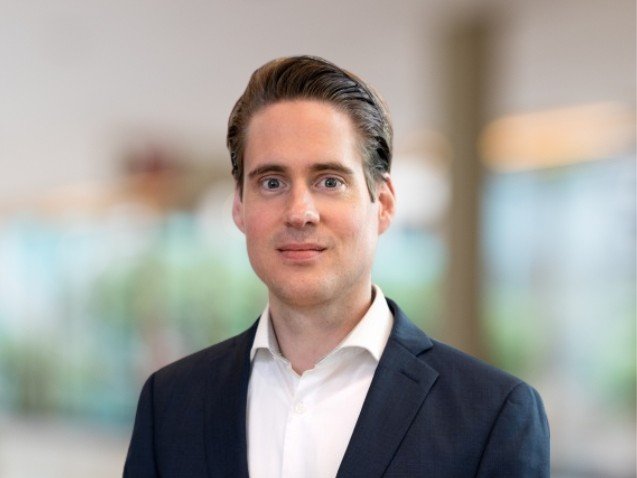
In the run-up to the Private Equity Summit 2026, MandA.be sat down with Wessel Wijtvliet, AI solutions lead at Loyens & Loeff and research fellow at KU Leuven, to distinguish dealmakers’ value in an era of AI.
Wessel has built his career at the intersection of legal theory, technology and practical implementation. “I’ve always had an interest in the bigger picture questions, but I believe they should go together with more practical questions,” he shares. “Before you can have a useful discussion about why something matters, you first need to understand what the technology actually does and how it changes the work.”
Wessel’s work in AI started well before today’s wave of generative AI enthusiasm. After completing his PhD in law, data analysis and artificial intelligence at KU Leuven, he continued in academia as a postdoctoral researcher and later as a research fellow, focusing on the same topic. In 2019, he moved from academic research into legal practice, joining Loyens & Loeff as a legal engineer with a focus on legal AI. This was years before the launch of ChatGPT. That timing matters, because his perspective on AI in law was shaped before the current hype cycle around generative AI and is grounded in years of research into how technology changes legal work.
Today, Wessel leads the firm’s AI Solutions Team, which brings together legal, technical and product expertise to turn AI from experimentation into usable solutions for the firm’s Expertise Groups. Throughout his career, he has watched people call AI an efficiency tool limited to summarising, recording or transcription. “It’s definitely not incorrect, but I think it’s incomplete,” he notes, elaborating that it’s only the start. “The most logical place people begin is where they already are, on a topic they’re already familiar with, like their day-to-day activities, because there they can see what it does and doesn’t do well.”
But that’s not where it should end:
“We are containing the impact of technology only where we want it to be applied, whereas transformative technology should change the context in which we operate.”
One of his favourite examples is from the introduction of electricity. “Factories could use electric light to replace candles, which was cheaper and useful for efficiency, but the bigger change was not simply better lighting,” Wessel explains. “With steam power, heavy machinery had to be arranged around the energy source, so the design of the factory was largely decided for you. Electricity made it possible to redesign factories around a different logic of production, including assembly lines and more flexible layouts. That is where the real transformation happened, together with a whole host of socioeconomic consequences.”
The precise shape of AI’s long-term influence is still uncertain, but if history and current trends are anything to go by, the M&A industry, like many others, is in for significant change. “Everything is built around constraints. Solving these problems is how you add value,” he says, emphasising that M&A is no exception. “That’s why you have to hire an advisor, because your own capabilities are limited and you need an expert’s guidance.”
Where advisors’ value was previously built around processing information, such as reading, writing, analysing and comparing, AI is beginning to reduce some of these bottlenecks and shift value creation to new deal areas. “Now, dealmakers have to ask what the next constraint is that they can solve when AI reduces the constraints they used to own,” Wessel adds.
Moving away from the philosophical
AI has already impacted how dealmakers analyse unstructured data. A recent McKinsey article shows some tools can scan public information on more than 40 million companies in multiple languages and create a short list of relevant targets in minutes. However, Wessel warns that the advantage AI presents dealmakers does not stop at better analysis:
“You should assume everybody has AI and can make an excellent analysis. So where lies the difference?”
The answer comes back to something most dealmakers already know well: proprietary workflows and data. “As an M&A player, you might have some proprietary data that no one else does. What you do with those insights becomes much more important than how you get them,” Wessel suggests.
“And knowing what to do with them is not necessarily easy. It requires intelligence and expert judgement – that’s what sets someone apart.”
The speed at which you’re able to leverage technology can also provide an edge. “AI can compound differences over time. If you’re just a bit quicker than others, it could make a huge difference in the long run,” Wessel explains. He compares it to elite sport, where small, sustained performance advantages can compound into dominant outcomes over time.
Putting experience into practice
Wessel still keeps one foot in academia, passing the combined philosophical and practical knowledge he has gained over the years on to the next generation of KU Leuven students. He recalls one of the students from a recent summer school lecture coming up to him and admitting she hadn’t used AI yet, but her mother – who works in professional services – uses it for everything and is always encouraging her to use AI on a daily basis, too.
“But the mom has around 30 years of experience under her belt, so she could easily understand what the AI was doing and whether it was really adding value or not,” he adds, pointing to a report by Anthropic that shows Claude does more per prompt for more expert users. Specifically, experienced users got the AI to produce nine percent more actions and 13 percent more text output per prompt. The point is not simply that humans should plan and machines should execute. It is that the quality of the interaction depends heavily on what the human brings to it: domain knowledge, experience, judgement and the ability to recognise what a useful output looks like.
“If I look in our law firm, some of the most progressive people I have the pleasure of working with are the older generations,” Wessel observes. “They have seen the potential and are pursuing it full throttle.”
People often assume younger generations must know AI because they are digital natives, but experience matters because it helps people judge where AI is useful, what to make of the outcome and when an answer is not good enough.
Wessel usually recommends a three-stage approach, starting with applying AI to today’s work – not because that’s where the value will ultimately sit, but because it’s the fastest way to build a feel for what the technology can and can’t do.
“If it can automate the thing you did yesterday, that thing tends to stop being relevant, so don’t focus too much on it, beyond getting comfortable with the technology.”
The second stage is where new opportunities open up, when you start solving constraints that were previously untouchable. The third stage – and the one he thinks gets skipped most often – is more forward-looking; forming a view on how power will redistribute once those constraints are lifted and where a given firm or professional will end up sitting once it does. “It's good to have some idea for yourself and to keep updating that understanding as you make decisions," he says.
Loyens & Loeff runs its own summer school programme to help students develop a more practical and critical understanding of AI. “We always set the tone by asking them: do you want AI to simply answer your questions, or do you want to use it to become a better lawyer?”
Leveraging AI to become a better dealmaker
Wessel will pose the same question to Belgian dealmakers at the third edition of the Private Equity Summit on 22 October 2026, organised in partnership with Loyens & Loeff and the M&A Community Belgium. During the summit, he will explore AI's impact on sourcing, diligence, portfolio management, operating models and valuation in more depth, with a particular focus on which constraints AI is beginning to change and where value is truly being created today.
The summit is also an opportunity to connect with peers, learn where the Belgian M&A market really is and test which sector constraints AI may solve next, before those shifts become obvious to everyone.
Register here and join Wessel’s masterclass and more exciting conversations taking place during the Private Equity Summit 2026.

