

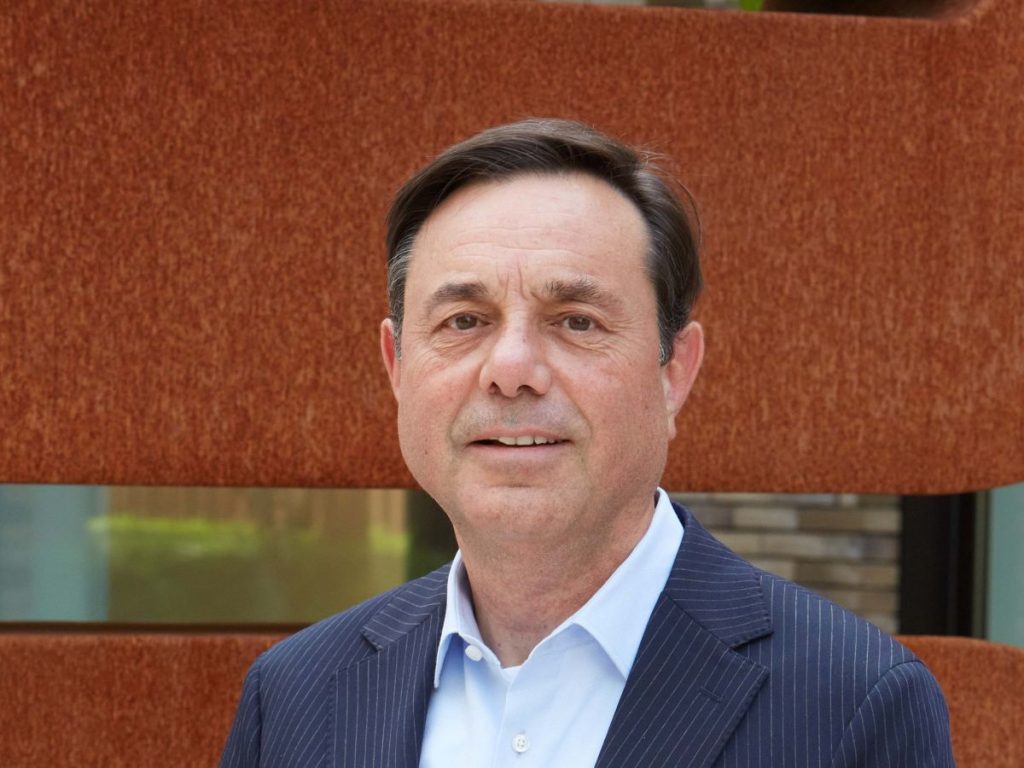
Bekaert agrees to buy Bangkok-based reinforcement specialist Dextra for €140 million, and how it fits CEO Olivier Biebuyck's M&A plans.
Olivier places the Dextra acquisition within Bekaert’s wider portfolio approach. “Our objective is to strengthen Bekaert’s market offering and build stronger customer partnerships to generate profitable and sustainable growth,” he explains in a statement. “We will continue to actively manage our portfolio toward businesses and applications where our differentiated capabilities can create value. This means focusing on organic growth in attractive markets while complementing it through disciplined acquisitions.”
On his first results call as CEO, on 30 July 2026, he suggested the next chapter “should increasingly be focused on organic and inorganic growth, preferably on engineered solutions for our key customers rather than just engineered products”. At the time, he admitted that he didn’t know what the split between organic and inorganic growth would look like, only that it had to be both.
He then shared three hypotheses he was testing. The first is to become a stronger partner to existing customers. “We offer them some products that are actually a piece of their puzzle, and I do believe that some of them would welcome us leveraging our application expertise and engineering capabilities to solve some of their pain points,” Olivier explains. The second is to double down on the areas where Bekaert believes there will be momentum, whether by capturing share of wallet or by secular trends. And the third, he says, is: “compounding that organic growth through targeted acquisitions in structurally attractive end markets where that combination of Bekaert expertise and [the expertise] of the acquired business can unlock new growth potential and value creation opportunities”.
What Olivier is sure of, however, is the targets he's after during his term as CEO, describing Bekaert’s buy-and-build strategy as:
“What I would call a string of pearls, meaning that we take some of the platforms and business lines that we like, and as we build our organic momentum with some of our internal initiatives, we complement those initiatives by a string of acquisitions that help us expand our capabilities or accelerate some of the things we want to do.”
A second route is to “acquire in areas where we still have what we call a patenting advantage, that enables us to enter a market or a product line or an industry that we, frankly, are completely underrepresented in today”.
“The two are not mutually exclusive,” he adds.
A sustainable construction gem
Dextra looks like one of these pearls. Founded in Bangkok in 1983 by French entrepreneurs, Dextra generated €118 million in sales and €20 million in EBITDA in 2025, a 17 percent margin. It employs more than 1,000 people and runs three production facilities in Thailand, India and China. “After 43 years of creating and developing Dextra, the time has come to begin a new chapter under new ownership and leadership,” notes Dextra Group Chairman and CEO Jean-Marie Pithon, one of its founders. “After several successful years in partnership with Lakeshore Capital, we believe Bekaert is now the ideal home for Dextra, bringing together complementary strengths and opportunities for future growth.”
On the 5 November deal call, Olivier described Dextra as “a highly complementary business in one of our most attractive market segments, sustainable construction”, and a “leading accredited supplier for critical infrastructure” – a step towards Bekaert's aim to “increasingly differentiate through advanced materials and engineering solutions”.
The deal presentation also formalised Olivier’s three hypotheses into strategic pillars for the group: leveraging its capabilities in advanced materials and engineering solutions, investing organically in growing end markets, and accelerating growth through targeted acquisitions in attractive markets.
Dextra will join Bekaert's Sustainable Construction business, the home of the Dramix steel fibre concrete reinforcement Bekaert developed in 1973. For Bekaert Sustainable Construction divisional CEO Eric Peeters, the fit is about both products and geography:
“Dextra brings highly complementary, sustainable products and services to our existing offering across key markets in EMEA, India and Asia. At the same time, Bekaert's presence in North America creates opportunities to expand the combined portfolio to a broader customer base in this market.”
Limited impact on leverage
According to the deal presentation, Dextra “roughly doubles” its addressable market in critical infrastructure, with each company's serviceable market estimated at about €1.2 billion by 2030.
Bekaert stresses that the €140 million enterprise value, on a cash-free, debt-free basis, represents 6.8 times Dextra's estimated 2026 EBITDA before synergies, with additional earn-outs linked to significant EBITDA improvement in 2027–2029. It expects the deal to be immediately accretive to earnings per share. The earn-out amounts are not disclosed, and Bekaert points to commercial and scale synergies as “further potential value upside”.
The West Flemish group will fund the deal from existing cash and credit facilities – in July, Olivier said "the financial position offers opportunities to invest" – and says the financing has limited impact on leverage and preserves its financial flexibility.
Bekaert ended 2025 with net debt of €180 million, or 0.4 times underlying EBITDA, after €314 million in free cash flow. By the end of June (2026), that had risen to €367 million, or 0.82 times, which CFO Seppo Parvi attributed partly to acquisitions and share buybacks. That is still within Bekaert's indicative range of 0.5 to 1.5 times, and its capital allocation framework ranks M&A after the balance sheet and organic growth, but ahead of dividends and share buybacks.
Read also: Exmar sells subsidiary to Bekaert for 40 million euros
Closing is expected in the first half of 2027, subject to regulatory approvals and other customary closing conditions. Deloitte Belgium advised Bekaert on the transaction.