

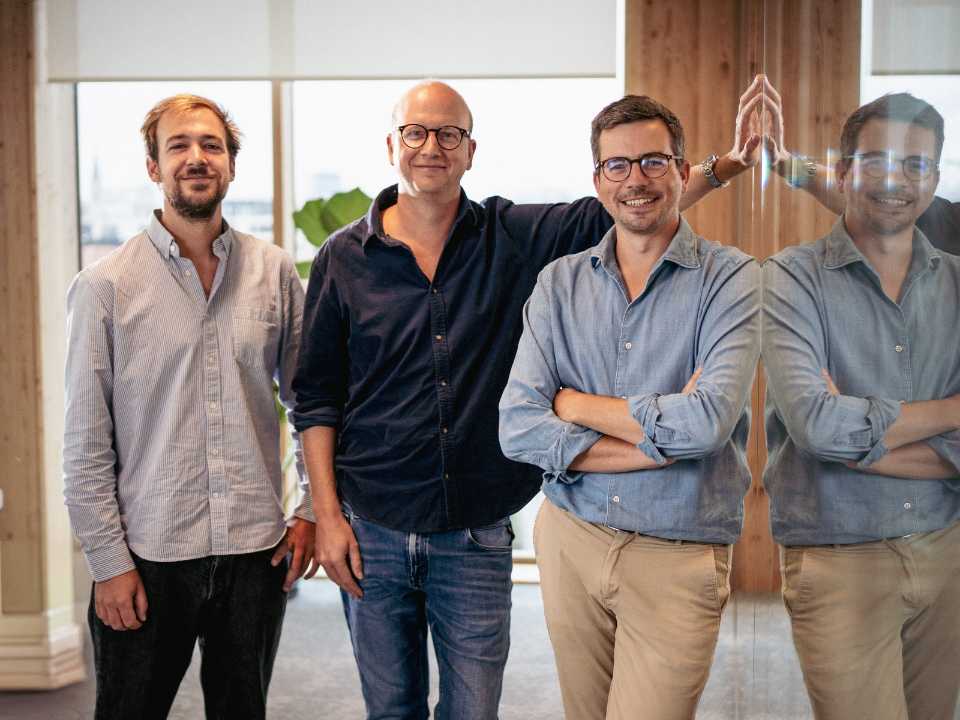
Gauthier Henroz, Henry Hertoghe and Matthieu Hertoghe have turned an industry problem into a €10.5 million Series A deal.
At the start of their careers, while configuring and integrating software across Belgian SMEs for different IT companies, Gauthier Henroz, Henry Hertoghe and Matthieu Hertoghe faced the same fragmentation issues. “Businesses use a wide variety of tools and whenever we had to connect our software to these ecosystems, we had to basically redo everything, costing companies up to €30,000 per year just for integration,” Gauthier shares.
Realising there must be a solution, he quit his job and started building Chift, though Gauthier admits it wasn't very “VC-able” at the beginning: “The first business plan we had was for serving IT service companies or integrators. Not to mention, we were first-time founders with a lot of hypotheses and little market research to back us, which meant we weren’t trustworthy yet.”
They met with 100 SMEs, software vendors, integrators, CFOs, etc., to dig into the problem they were trying to solve. “We saw the AI and e-invoicing wave coming, where all companies in Europe would start looking for tools to send and receive invoices. But in order to use AI for accounting, you have to connect it to your finances,” Chift CEO Gauthier explains. This is where the three founders saw the most fragmentation, especially regionally.
“Accounting platforms in Belgium, the Netherlands, the UK and France, for example, are very local, which comes with cultural and regulatory differences, as well as varying levels of maturity in terms of tooling.”
For example, some rely on old-fashioned ERPs while others have newer platforms. “In Germany, DATEV serves 90 percent of the market, and in Spain, they only have on-premise platforms,” Gauthier elaborates. “In the Netherlands and the Nordics, SaaS platforms are more advanced, while France and the UK are the most innovative in terms of platforming. In Italy, on the other hand, they have platforms such as Team System and Zucchetti that have everything and don’t want to open themselves up – similar to what we saw in France three years ago.”
Many platforms are also evolving into fintechs. “Most B2B software – such as ERPs – are adding payment capabilities, and spend management systems are providing BAS,” Gauthier notes.
Throughout these conversations, the product changed a couple of times before the founders settled on an integration platform-as-a-service (iPass).
Round one (2022): The pre-Seed promise
At the time, Chift’s headquarters were listed as Wallonia – where Gauthier, Henry (CTO) and Matthieu (CCO) were from – so they approached Wallonie Entreprendre, and Seeder Fund which became the first investor to say yes.
The local development agency gave the three founders a convertible note, on the condition that they also back the investment with private capital.
Round two (2024): A €2.3 million Seed
Two years later, Chift launched its €2.3 million seed round, backed by Entourage Capital and Shapers. Beyond capital, this gave the company access to two valuable industry experts: “Pieterjan Bouten [founder and general partner at Entourage Capital] has extensive experience backing and scaling international companies linked to AI, whereas Philippe and Thomas Teixeira da Mota [founding brothers of Shapers] have a lot of fintech knowledge and a large network across Europe,” Gauthier points out, adding that they liked the questions they asked during the investor meetings.
“There are some teams that, as soon as you meet them, you just really want them to be super successful. And you hope you can find a way to partner up and be a tiny part of that journey. This is exactly how we felt when we met Gauthier, Henry and Matthieu a couple of years ago,” Thomas revealed.
“It was our second fund investment at Shapers back in 2024. It's been a lot of fun to see them execute so well alongside the talented and growing Chift API team!”
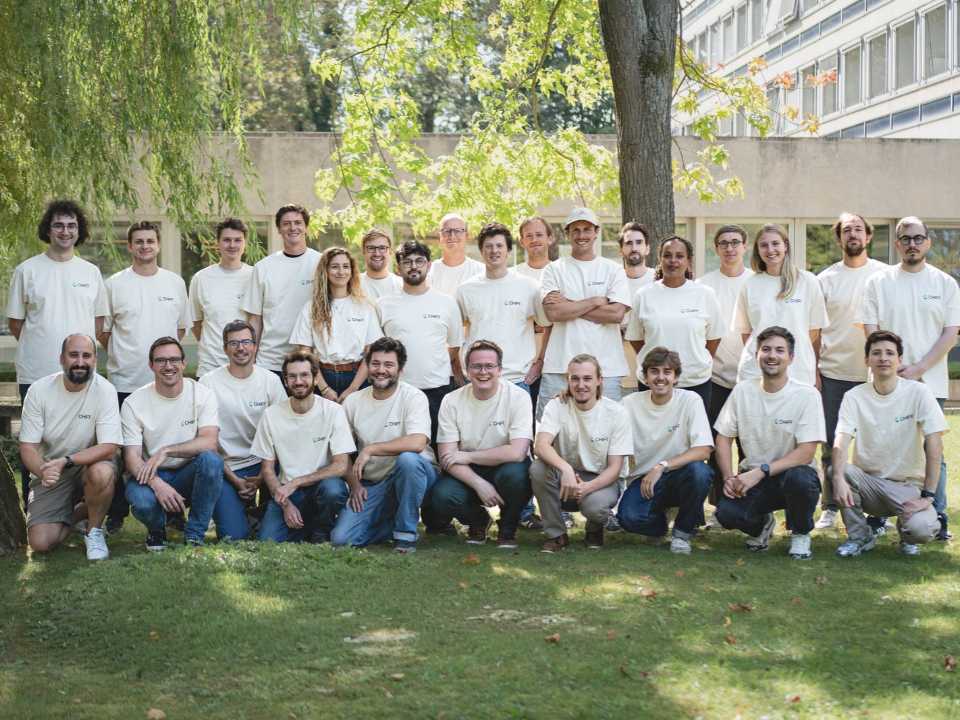
Round three (2026): A €10.5 million Series A
After two more years, Gauthier, Matthieu and Henry still had half of their seed funding and needed to decide what to do next. “In order to become a leader in Europe by the end of 2027, we had to make use of the first-mover advantage we have and continue investing in our product, marketing and presence in every country,” Gauthier recalls what went through their minds at the time.
Instead of limiting themselves to the funding they had left, the founders set an amount they would need to do this and started looking at a Series A round. “We didn’t want to raise too much and put pressure on our valuation, but enough to be able to get to the next stage, so we settled at €10.5 million,” Gauthier adds.
During this round, he met around 70 investors (eight meetings per day). “I wanted to be 100 percent sure we would succeed, so I met a lot of people,” Gauthier explains. “We reached out to a lot of new investors, had several new introductions through existing investors and were already quite well-known in the fintech ecosystem.”
Narrowing down the final cap table
From these conversations, Gauthier remembers many investors asking the same questions, especially around AI: How do you survive the age of AI? How does it impact your business? Etc. “After a while, I was a bit bored, so we created an AI agent to answer the AI questions and instead focused on the questions that were really interesting and showed actual understanding of our business,” he shares.
With this approach, Chift narrowed their final cap table candidates down to a few, before selecting BlackFin Capital Partners as their lead investor, alongside their previous backers. “They have expertise in go-to-market strategies and a vast ecosystem around banks and fintech in Europe,” Gauthier says.
While Chift’s decisions were based on culture and commercial value, their adviser, Beyond Law Firm, was focused on governance and investors’ expectations around future liquidity. “Part of our job is to resolve technical legal points with the other advisers and distinguish them from issues requiring a commercial decision,” partner Thomas Daenen highlights. “On those commercial issues, we do not simply identify the question and leave it with the founders; we advise on possible approaches and propose legal solutions that can accommodate different objectives.”
Beyond explaining the deal's legal, practical and financial implications, the advisers worked closely with Gauther, Matthieu and Henry on the negotiations too. “Shareholder representation is relevant, but so is the experience around the table, clarity of responsibilities and workable decision-making procedures,” Thomas says.
“I also consider it important to discuss investment horizons and possible exit scenarios early,” he adds. “That does not mean agreeing on a fixed exit date, just that the parties’ expectations should be clear.”
More generally, Thomas is sensitive to the fact that shareholder agreements should not affect the company's success: “Our role is to help the company understand the implications and reflect on the agreed approach in the legal arrangements.”
He particularly appreciates how quickly the founders understood the issues and their commercial implications, as well as the open and direct communication throughout the process. “We could discuss both the substance of a point and the best way to address it with the other participants. When we agreed that they should take a discussion forward directly with investors, they handled it very effectively.”
Navigating negotiations: An adviser’s perspective
Prioritisation and communication were particularly important for Beyond Law Firm as it coordinated the legal process for Chift, alongside BlackFin’s Belgian advisers, Loyens & Loeff. “To move efficiently, I generally favour agreeing the main terms with the lead investor first. That gives the discussions a clear framework rather than trying to negotiate every point with everyone at the same time,” Thomas reveals. “However, it is a starting point, not a reason to assume that the existing shareholders’ agreement is a formality.”
He explains that there needs to be an understanding on both sides: the existing shareholders need to recognise that a new funding round may require the governance arrangements to evolve, while the lead investor needs to recognise that the early backers helped the company reach this stage and remain part of its future – their concerns deserve to be considered on their merits.
Choosing the appropriate format for each discussion was also crucial to ensure momentum. “Some points were best handled between legal advisers; others were better addressed directly between the founders and investors,” explains Thomas. “We worked with the founders to decide when those direct conversations would be useful and how to approach them.”
Moreover, in a cross-border transaction such as this one, an important part of Beyond’s legal work is ensuring the proposed investment terms operate as intended under the applicable local framework. “Our experience working with French venture capital investors helped us anticipate questions and explain how the proposed arrangements would operate in Belgium.”
Thomas underscores the human dimension of these discussions: “People can accept that not every existing right will remain unchanged, but how that discussion is handled matters,” he states.
“You can win a point in a negotiation and still damage the relationship. If someone leaves the process feeling sidelined or that their contribution has been overlooked, that frustration can resurface when the next difficult decision comes along.”
He stresses that these shareholders will need to continue working together after closing. “Our role is to understand what really matters to each participant, identify where there is room for compromise, and propose legal arrangements that can accommodate those concerns.”
That is where the calls, discussions and careful drafting make a difference, he emphasises. “Also knowing the people around the table – such as the institutional investors that we meet in many transactions – certainly helps.”
Thomas concludes that the objective is to secure the funding on workable terms while preserving the shareholders’ ability to move forward together.
Timeline to Series B?
If their current trajectory is any indicator, we’ll have to wait two more years (until 2028) before the founders of Chift are ready to think about a Series B. However, with the exponential growth promised by new capital, two seasoned experts and their extensive networks to lean on, as well as one very helpful legal adviser, the next funding round might come sooner.
“We’re really taking it step-by-step,” Gauthier says. “We’re quite frugal with our expenses, so we can grow for quite a while with this money.”
He brings it back to the hypothesis that started everything:
“We could go to the US or somewhere else and there we would need to think of more fundraising, but there are many possibilities. For now, we’re focused on Europe.”

