
Economic challenges and opportunities for Europe: Peter De Keyzer’s take on Mario Draghi’s vision.
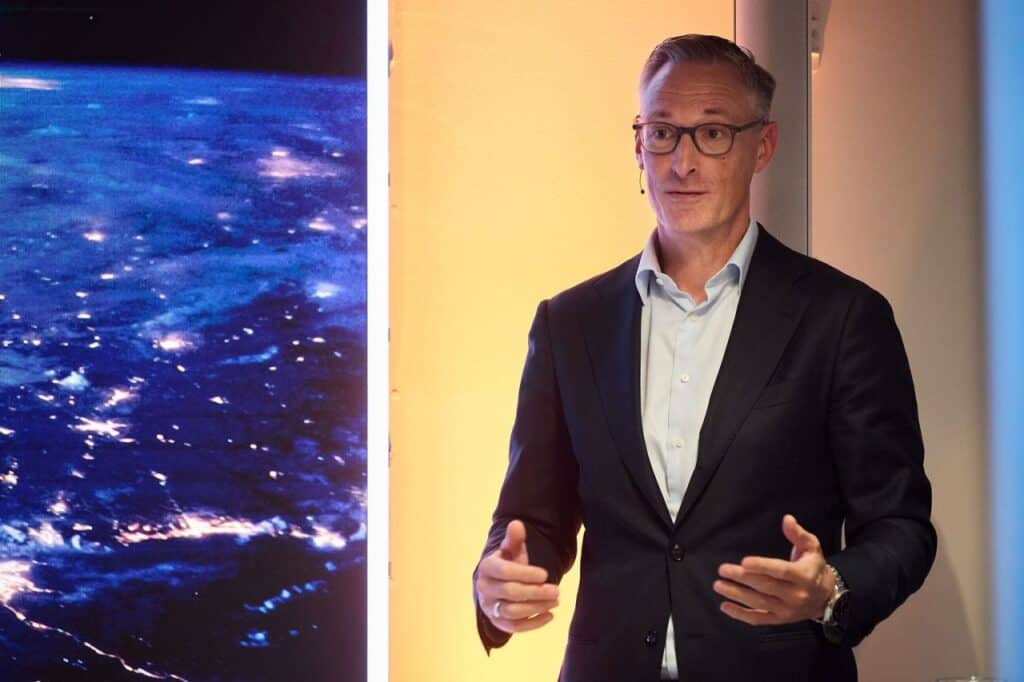
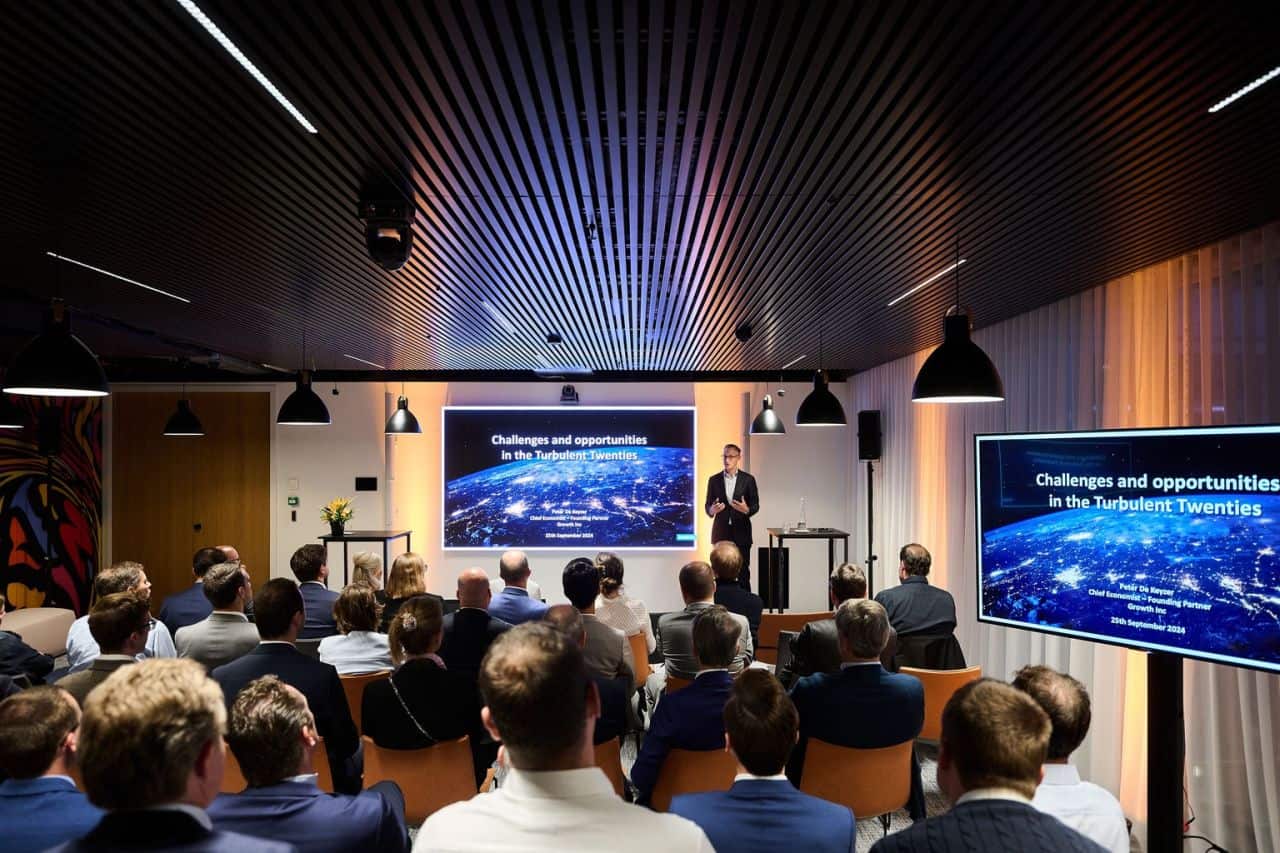
At PwC Belgium’s ‘Recent Trends in M&A’ event, economist Peter De Keyzer took the stage to shed light on the economic hurdles facing Belgium and Europe. In his candid talk, De Keyzer didn’t shy away from addressing the difficult realities confronting the region, but true to his character, he infused optimism, focusing on the opportunities these challenges present. "We need cross-border takeovers", he emphasized. "If you want European champions, you have to allow foreign companies to take over and hope your own firms make cross-border deals in the future."
In the second part of his insightful presentation, Peter De Keyzer delved deeper into the threats and opportunities facing the European economy. Using Mario Draghi's comprehensive plan as a backdrop, De Keyzer emphasized the critical decisions Europe must make to remain competitive in a rapidly changing global landscape. His analysis highlighted the fundamental areas where Europe needs to improve – energy, innovation, and market efficiency – while cautioning against protectionism and overregulation. “It's not because of not enough regulation that we don't grow as fast as the US.”
Fear first, opportunity second
De Keyzer began by highlighting a universal truth: the fear of change. "Economists and M&A consultants have something in common”, he remarked. "We both dislike the status quo. If nothing changes, there’s no need for us." He went on to explain that today’s economic landscape is far from static.
"We're on the verge of massive shifts—whether in geopolitics, de-globalization, or Europe’s weakening position compared to the U.S. and other regions. Add to that protectionism and the looming threat of unrest, even war, in Europe. It’s enough to make anyone anxious", De Keyzer said.
However, he quickly pivoted to another central theme: human ingenuity. "Yes, our initial reaction is to perceive everything as a threat, but we’re also born problem-solvers”, he stated. "We come up with solutions. That's how we've become the most prosperous, literate, and healthy generation to ever live. These challenges – though scary – are opportunities in disguise."
Rapid changes in a turbulent world
Touching on the dizzying pace of change, De Keyzer invoked a famous quote. “I don't really like to quote communists usually in my presentations, but Lenin had a good one: ‘there are decades where nothing happens, and there are weeks where decades happen.’ The past four years are a testament to that”, he observed. From a global pandemic and recession to rapid technological advancements and geopolitical conflicts, De Keyzer made it clear that such disruptions will continue to reverberate through the economy for years to come creating new threats and opportunities.
The economic equation: population and productivity
De Keyzer laid out a straightforward equation for economic growth: population growth + productivity growth. "In the long run, it's that simple", he explained. "More people to work and better technology to make them more efficient." However, Europe is falling behind on both fronts. "Europe's population is shrinking, and that means our labor market will remain tight for the foreseeable future."
Looking ahead, De Keyzer pointed to Africa as a region of tremendous potential. "Africa’s population will quadruple this century. Even if they have no productivity growth, their economy will grow fourfold. But in Europe, where the population is contracting, higher productivity is our only way out."
The US vs. Europe: Europe is lagging far behind
Shifting his focus to Europe’s position relative to the United States, De Keyzer didn’t mince words. "Making America great again? It’s already the fastest-growing advanced economy. They have cheaper energy, a more flexible workforce, all the major tech companies, and big subsidies from the Inflation Reduction Act. You would wonder what you have to make greater than what it already is.”
One area in which Europe is disadvantaged is energy. Europe's energy costs are significantly higher compared to the US, especially in energy-intensive industries. Europe’s dependence on foreign, often autocratic, regimes for essential raw materials presents another major challenge.
In the long run, if you look at the economic activity, Europe has been lagging for some time already, De Keyzer pointed out. “From 2007 up to today, Europe grew by 10 percent in total, the US by 35 percent. And that was basically, all these realizations, that was basically the starting point of Mario Draghi's report.”
De Keyzer identified technology, specifically AI, as a potential game-changer for Europe. "AI could boost growth beyond our expectations", he said, citing a recent Google report that estimates AI could add 10 percent to Belgium’s GDP by 2030. "That’s enough to erase our budget deficit if we’re smart about it." Still, he admitted that Europe is trailing in the global tech race.
Defense spending: a hard sell
On the geopolitical front, De Keyzer acknowledged Europe’s underinvestment in defense. "This is Belgium’s air defense", he quipped, showing a photo of military equipment in a museum. "For 30 years, we didn’t have to worry about security. But the world isn’t safe anymore." With countries like Poland ramping up defense spending, Belgium and other EU nations need to step up. "By 2025, Poland will be spending 4.5 percent of its GDP on defense. Meanwhile, Belgium is at the bottom of NATO’s rankings", he said.
De Keyzer warned that the days of relying on American protection are numbered, especially if Donald Trump returns to office. "Trump could easily say, ‘Europe, Ukraine, and Russia are your problem. I'm focused on China.’ If that happens, Europe will need to fend for itself."
The return of protectionism
Finally, De Keyzer addressed a critical shift in global trade: the return of protectionism. "We’ve enjoyed eight decades of prosperity and openness, but now the pendulum is swinging back", he noted. As an example, he mentioned Europe's recent decision to impose tariffs on Chinese electric vehicles. "If climate was truly our only concern, we’d welcome those cars with open arms. But this shows that Europe values its industry too much to allow unchecked competition."
De Keyzer closed this section with a sobering reminder: "The West is no longer the center of the world. The BRICS countries – Brazil, Russia, India, China, and South Africa – now outpace the G7 although Russia is not going to contribute a lot anymore going forward. The global landscape is shifting, and protectionism is creeping back in. We need to adapt."
Draghi’s ‘next five-year plan’
De Keyzer amusingly refered to Mario Draghi’s vision as a ‘five-year plan’, drawing parallels to state-directed economic planning. Draghi, in his typically direct manner, warned that Europe’s choice is stark: "Do this or choose slow death." He stressed that without key reforms, Europe risks becoming an ‘irrelevant museum’, a mere tourist destination compared to more dynamic economies like the U.S. and China.
One of Draghi's major concerns, echoed by De Keyzer, is Europe's productivity gap compared to the U.S. The data is sobering: Europe’s GDP per capita lags behind, not due to a lack of talent but because, as De Keyzer puts it, "We don’t seem to be able to translate ideas and innovations into marketable products at the same speed and scale as the US.” He attributes this to a fragmented internal market where national giants remain big in Belgium or big in France, but fall short of achieving the global dominance seen with American companies.
The scale problem is striking. Comparing Europe’s cloud providers to US giants like Amazon, Microsoft, and Google, De Keyzer explained, "Deutsche Telekom may be a European giant, but it’s a worldwide dwarf." This lack of critical size not only hampers Europe’s competitiveness, but limits its ability to shape the future of key industries, including technology and artificial intelligence.
The funding gap: Europe’s venture capital deficit
Another challenge that Draghi highlighted is Europe’s underdeveloped venture capital market. De Keyzer pointed out that while Europe’s economy is only 20 percent smaller than the US, its venture capital market is much less mature. "We depend too much on bank financing”, De Keyzer explained, "and for banks, a lot of these stages are too risky." This has created a bottleneck where innovative ideas fail to scale because there simply isn’t enough private capital available to fuel growth."
De Keyzer also discussed the lack of a third pension pillar in most European countries, which further reduces the available capital for investment in startups. "Countries like the Netherlands and Norway, with large pension funds, have more liquidity to invest in growing businesses”, he explained, stressing the need for more unified European capital markets to ensure that "Spanish savings can fund Belgian startups."
The market fragmentation problem
One of Draghi’s most significant recommendations is the creation of a true single market for Europe. “Despite years of integration”, De Keyzer noted, "Our markets are still fragmented." This is particularly problematic in sectors like technology, where cross-border mergers are essential to achieving the scale necessary to compete with global giants. He cites the blocked merger of Alstom and Siemens as a missed opportunity, as European companies now face fierce competition from larger Chinese rivals.
"A lot of our companies are sub-critical in size", De Keyzer explained, and unless Europe facilitates more cross-border takeovers, its businesses will continue to struggle to reach the scale needed to compete globally. “Draghi said it: we need more cross border deals.”
Cultural barriers: a call for more entrepreneurship
Perhaps the most intriguing aspect of De Keyzer’s analysis was his emphasis on the cultural differences between Europe and the US. One of the reasons for America’s economic dynamism, he argued, is its culture of risk-taking and entrepreneurship. "There’s a culture of risk-taking and entrepreneurship that we might not have in Europe", De Keyzer said. He criticized the tendency of European governments to decide which sector wins through subsidies and tax breaks, a practice that can distort markets and stifle innovation.
De Keyzer called for a "cultural change" in Europe, urging policymakers to focus on fostering entrepreneurship and allowing the market to determine the winners.
A new era of opportunities
Despite the daunting challenges, De Keyzer remains optimistic. He stressed that Europe has always overcome crises and can do so again. His vision for the future includes more cross-border mergers, better energy markets, and pragmatic decarbonization policies. He also highlighted sectors with significant growth potential, including defense, cybersecurity, artificial intelligence, and climate change mitigation.
De Keyzer’s closing message was one of resilience and adaptability: "Every challenge holds an opportunity. At first, it looks scary, but in 10 years’ time, you will see who has made an opportunity of these challenges."

More insights in M&A?
You can get a copy of the PwC ‘Recent Trends in M&A’ here

