

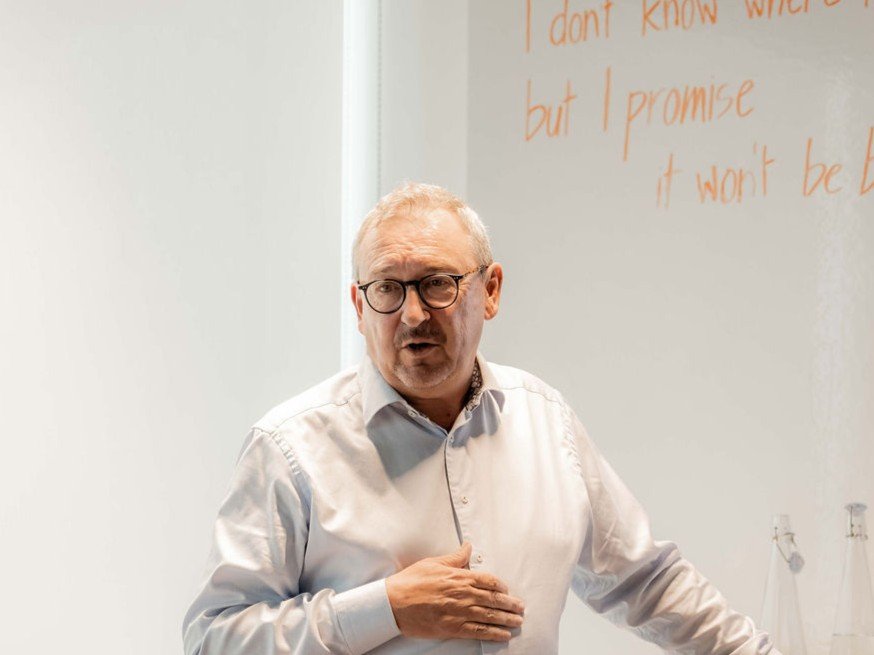
During a recent M&A Community Belgium event, Syntagma Capital advisory board member and VIU founder Rudi Nerinckx revealed the top priorities on a carve-out HR agenda; from competency audits and TSAs to value creation plans.
“In a standard strategic acquisition, the HR agenda often focuses on integration and the creation of synergies. Whereas with carve-outs, it is about separation and the creation of a standalone entity, appropriate for the reduced size,” unpacks Rudi Nerinckx, a seasoned human resources executive with decades of hands-on experience in managing international transactions, integrations and large-scale transformation programmes.
An important question to ask during due diligence is thus: “What will be needed from an organisational structure, governance and people competence point of view to run the carve-out as an independent entity?” Rudi notes.
“The deeper the target is integrated into the mother company, the more complex it is to draft a plan for full autonomy,” he adds, explaining that corporate resources of the mother company are often only partially assigned to the targeted business, and the complexity increases if commercial teams and/or other functions are of multi-business/multi-product purpose. “The seller often provides a ‘pro forma’ P&L for the business, but the allocated resources are often underestimated in order to boost the EBITDA.”
This leaves the buyer with the crucial task of estimating the real cost of the current organisation while simultaneously considering potential future simplification opportunities, processes, and tools. This reflection will be an important building block for the future value creation plan.
Once the deal is signed, Rudi advises preparing a detailed plan to cover the competence gaps. “Part of the plan should be a commitment from the seller to support via a Transition Service Agreement (TSA) during a set period after closing. In that case, make sure the TSA, and its associated cost, is crystal clear.”
Simultaneously, he suggests developing a plan to get out of the TSA as soon as possible. “In a lot of cases, you will have to recruit additional resources, as carve-outs do not always come with a CEO, CFO, CIO, etc…” Rudi adds. In that context, it is good practice to give current management a chance, but important to realise that a business line manager is not a CEO, a business line controller is not a CFO and an HR business partner is not a CHRO.” This step-up is often underestimated.
“Whether you choose an internal or external solution, you should assess the candidates in the context of the specific challenge or value creation plan of the carve-out,” Rudi shares, explaining that the most common reason leaders fail is because their profile or experience is not aligned with the company's new trajectory. “For example, their track record might be developing new markets, but the role requires someone who can right-size the company. Or vice versa, the role requires someone who can grow the market, but the manager only knows how to cut costs.”
If a buyer didn’t have the opportunity to meet face-to-face with senior management before signing, Rudi encourages them to insist on being introduced to the team before closing the deal. “This will tell you much more about their expectations and sentiments surrounding the carve-out, as well as give you a better indication of the level of competence – information you won’t find in the data room,” he says.
“Keep in mind that while you assess senior management, they will also be evaluating you as a potential employer,” Rudi points out. “It is not unusual for them to influence the choice of the buyer.”
Simplification drives deal momentum
Overall, Rudi believes the biggest shift should be in managers’ mindsets: from what they are used to in the larger mother company and would potentially like to have, to what kind of organisation the business can afford in the context of a reduced scope. Trimming non-essential tasks, inefficient procedures, or peripheral projects are often motivating for management as they see purpose again in all that they do.
“For example, you can often reduce reports,” Rudi says, using an example from his own career: “I once asked a company to stop all reporting for one month and see who was requesting the documents – if at all. More than 50% of the reports were not requested, so we cut them.” He explains that, in many large companies, a manager will want a report for a specific reason. When they are replaced, their successors want a different report, but the first report remains. And so on, and so forth… “After a while, you have reports that nobody looks at, but people continue to perform them.”
At the same time, colleagues often request reports that are slightly different for their various projects. “These are often a lot of work for close to no value,” Rudi points out. “Make them sit together and align on a standard.”
Similarly, the approval process in big businesses can be an administrative burden, while smaller companies tend to have less red tape. “A lot of policies only exist because one percent of the population might misuse the situation. But, I believe, this only happens when managers don’t have the guts to play the role of management,” Rudi discloses provocatively. “If you can find a way to reduce that insecurity and give management the autonomy to make decisions – without having to rely on detailed rules and guidelines, but instead based on common sense – you can cut more than 50% of the unnecessary bureaucracy, too.”
Managing change and expectations post-close
Once a carve-out is closed, management is fully in charge and accountable for the business’s future. They have to make the final decisions while, at the same time, performing additional corporate functions they are not used to and can’t rely on the “group” anymore. “Sometimes managers think that the shareholder will assume the role of the group, only to find out after a while that they do not have an operational role,” Rudi explains. “This is a major shift.” He emphasises that it is the buyer’s job to communicate a clear governance model from the start of the deal to avoid misunderstandings.
As the carve-out is not ‘one of the businesses’ anymore but the business, financial results, strategy execution and cash management get stronger focus. “This can also be new to managers who are not used to having their own P&L and who stopped reporting at a gross margin level in the past,” Rudi shares.
When the company name changes, leaders are usually concerned about a potential loss of identity. “It is important to quickly develop a new brand and to help people identify with it,” Rudi says.
Courage as a carve-out value creation lever
According to Rudi, a carve-out is the ideal environment for people who are nourished by broader job content, faster decision-making, less bureaucracy, and more impact. They are happy to evolve from an executor to a driver and have a hands-on mentality. “These are people who are much more motivated by their involvement in the value creation plan and a potential ‘success bonus’ than by a ‘retention bonus’ – which could imply that you expect them to leave and is not the message you want to send, either.”
The three key behaviours he tends to look out for are courage and performance drive. “Leaders need to have the courage to change things, to try new ways, to give clear feedback and to take bold decisions,” he urges. “They continuously want to improve effectiveness and efficiency by highlighting bottlenecks, tracking resource allocation, streamlining processes, looking for new and more efficient ways to do things and banning activities that do not add value.”
He also believes good leaders are positive. “They focus on trying to learn from mistakes and solve them, rather than wasting energy to assign blame,” Rudi says. “Their positivity is also expressed in the way they care about their people.”
Building an optimal HR agenda for a carve-out
For Rudi, the carve-out HR agenda is ultimately a crucial element of the value-creation plan. “A carve-out gives management a real opportunity to lead,” he reflects. “The buyer’s job is to make sure they’re ready for it.”
When buyers invest the same rigour in people planning as they do in financial due diligence, they set the standalone entity up for success.
Read also: How Belgium’s M&A elite navigated carve-outs, strategy, and the art of letting go

